BANNED FROM CANADA
October 10, 2026
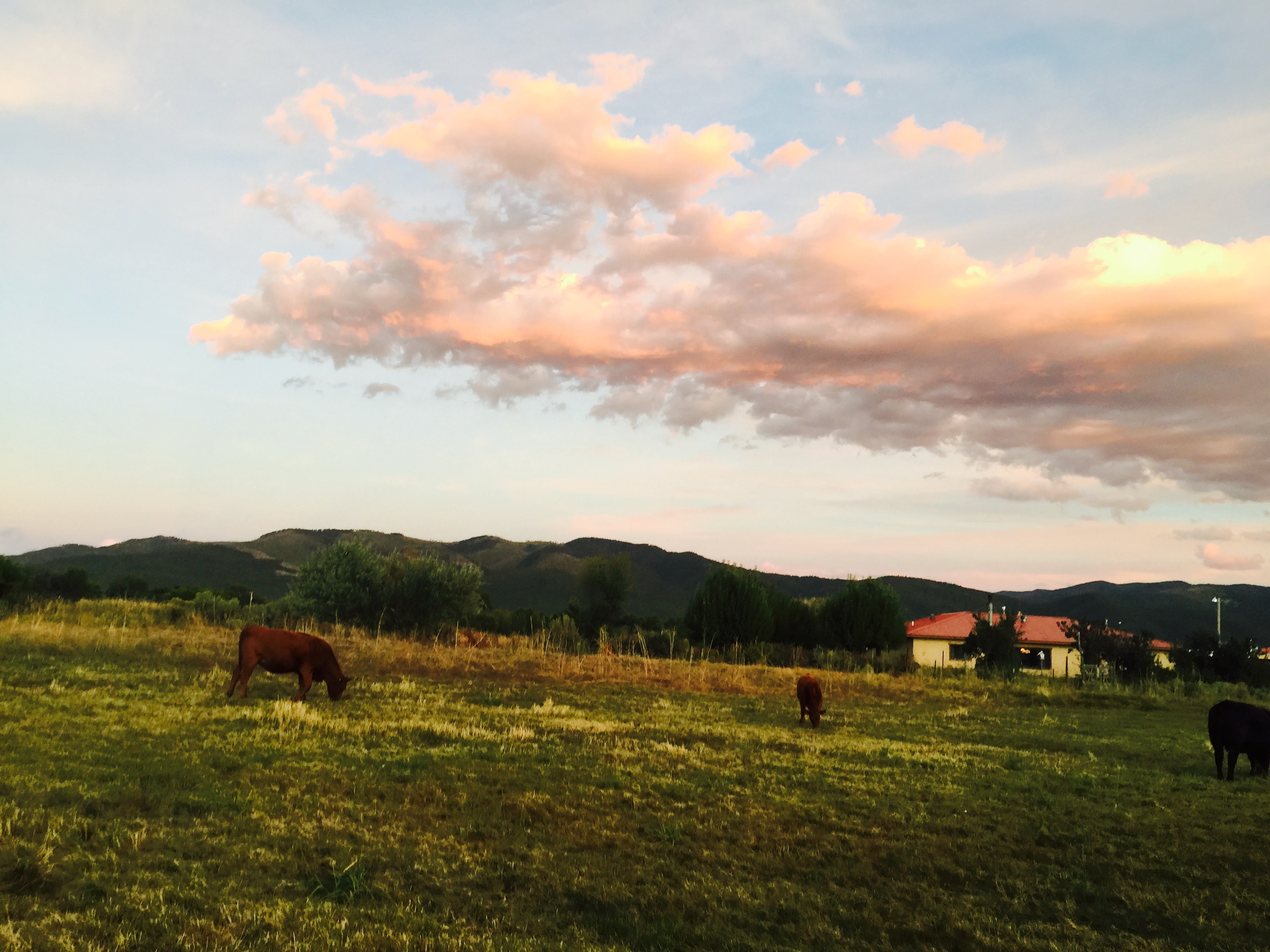
The salmon and turquoise glow illuminated the Taos Mountains outside the dining room window. Allan Antliff, professor of Art History and Visual Studies at the University of Victoria, glass artist Mary Shaffer, and I enjoyed dinner at her beautiful adobe home in Taos, New Mexico, one evening in 2017. Mary and Allan had just met in Marfa, Texas, during the former ghost town’s annual open studio exhibits.
Allan asked if I would be interested in having my archives at his university, and I accepted his offer. I spent several months organizing my documents in the manner he suggested, and once they were ready, I drove cases of legal documents, flyers, sketchbooks, newsletters, and personal planners up to British Columbia, crossing into Canada on the ferry in my G20 conversion van. This would be one of nearly 40 trips to Canada I had made since I settled my 25-to-life Three Strikes Felony case on February 16, 1995, in Judge Lucy McCabe’s San Francisco court. The criminal case started when I was attacked by Mayor Frank Jordan’s film commissioner, Nick Rommel, in a first-floor City Hall phone booth. The near-daily arrests for felony conspiracy to share food in violation of a court order had not stopped us from feeding the homeless, so it seems that the mayor thought sending me to prison for a quarter of a century might do the trick.
After I made my first delivery for the archives, I periodically shipped more materials, including original paintings and the 750,000-word manuscript of what would become my 150,000-word memoir, Soup Street.
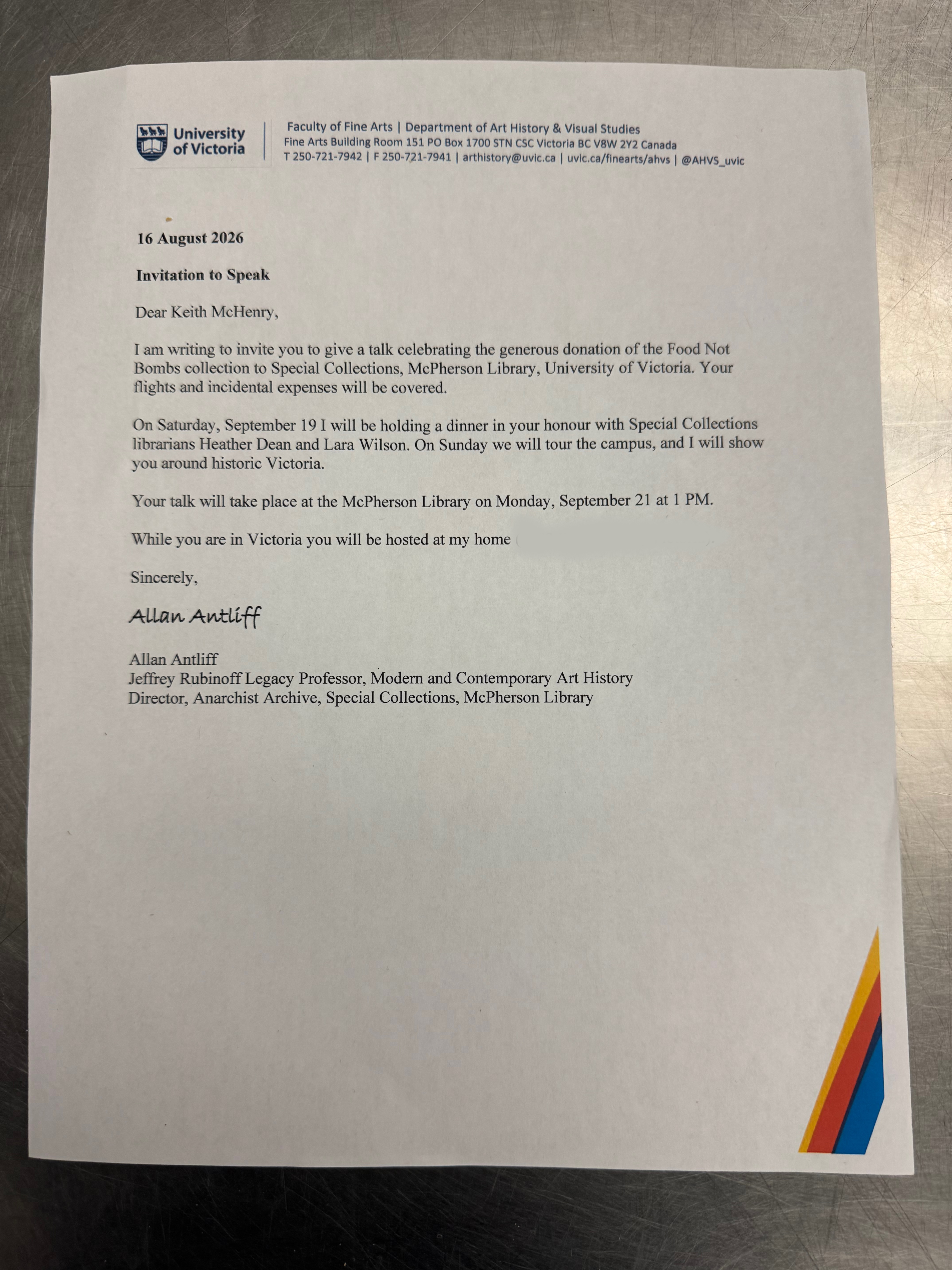
I emailed Allan to let him know my first memoir would be published in May 2026 and that I was ready to come up to Victoria as promised. Allan responded, “I propose organizing a Big Celebration of Food Not Bombs at University of Victoria to showcase your Food Not Bombs collection in the Anarchist Archive, plus you can launch your book at the event.” He purchased a round-trip flight from San Francisco and emailed me a link to request a table at the Victoria Anarchist Bookfair. He warned me that some of the local activists were smearing me and to make sure my application focused on my books. These were the same smears that had been used to cancel my presentation at the fifth anniversary of the founding of Food Not Bombs in Waltham, Massachusetts, suggesting there is an intelligence agency effort to silence anarchists who question obedience to government policies.
I was excited to speak at the dedication of the Food Not Bombs archives on Monday, September 21, 2026, and present my latest title, Soup Street, at the Victoria Anarchist Bookfair.
When I landed at Vancouver International Airport, all went well until I was stopped by Canadian Border and Customs. I have entered Canada at least 40 times since 1995. Each time I entered, I would be questioned about my felony conviction in San Francisco for assault, battery, and strong-arm robbery. I would explain that I had been framed by Mayor Jordan in San Francisco’s campaign to stop Food Not Bombs from protesting war by feeding the hungry.
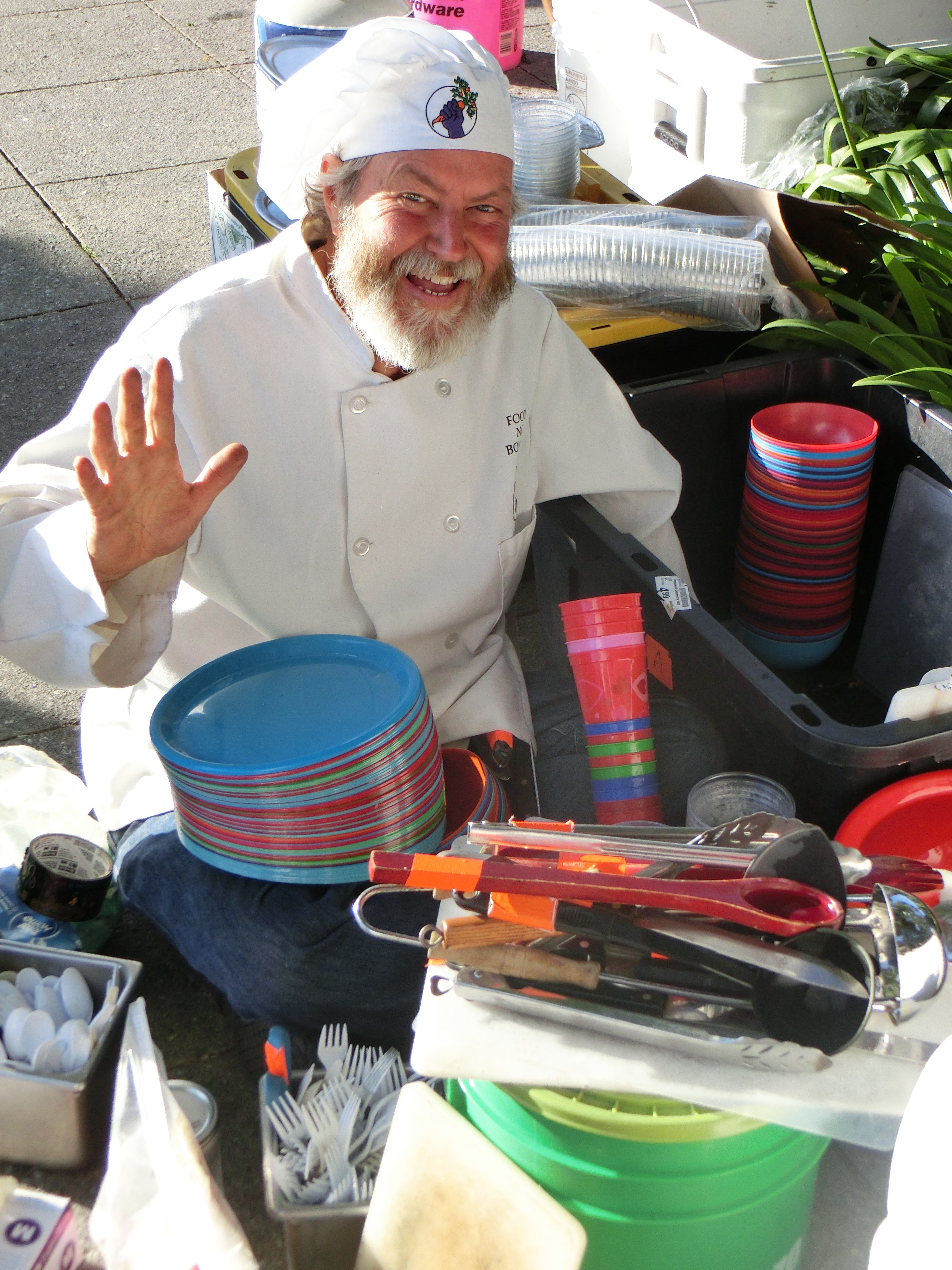
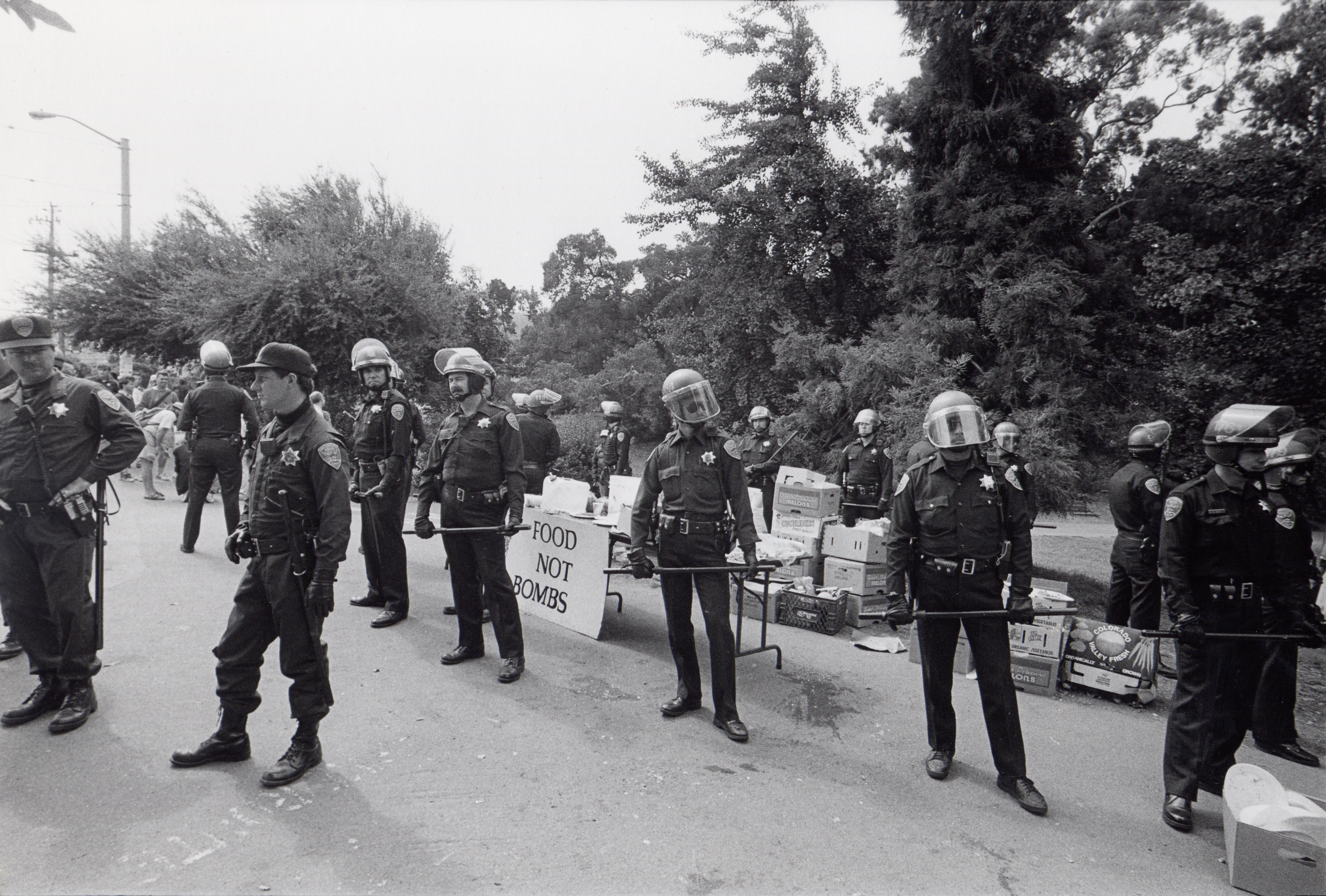
I would share that I had to plead out in a case in which I was attacked in a phone booth at San Francisco City Hall by the mayor’s film commissioner. As I was telling them about the events of January 4, 1994, I would open a copy of one of my books, such as Hungry for Peace, and show them the photos of the riot police guarding the food from the homeless at Golden Gate Park. I would tell the story of the arrest, explaining that I was wearing a chef’s coat and a puffy chef’s hat and had been holding a sign saying “Viva Zapatista, No NAFTA” while waiting for the rest of the food to be delivered for that noon’s meal. “Some guy crossed over the street from City Hall and yelled at me.” The deranged man made a call on his flip phone, and before long, a tow truck arrived and towed my truck and its load of bagels from my legal parking spot.
I described how I walked through the City Hall metal detectors to the closest payphone to call parking and traffic to locate my pickup. The guy I would later learn was Nick Rommel cornered me and started attacking me.
I would tell them that while on the call, I told the woman at towing, “I am sorry; someone is smashing against the phone booth, and I have to find another phone to call from.” That often drew a smile from the Canadian officials.
I continued by explaining that I went to a second-floor payphone and, after locating my truck, I headed down that beautiful cascade of stairs in the rotunda. As I was about halfway down the stairs, one of those in the mayor’s police detail called out, “Hey Keith, we want to speak with you.” I described how one of the officers had a little blue book, holding it up and saying I was being arrested under the new California Three Strikes law, suggesting the code was in the publication.
Most of the time, the Canadian border officials would laugh at the insanity of the conviction and wave me through. If they didn’t, I would drive to the next border crossing; I would repeat the story, and they would wave me through.
Not this time.
A tall, lanky officer directed me to place my suitcase and backpack on a long stainless steel counter. His partner removed all my things and spread them out.
I shared the story of my having been arrested for feeding the homeless and gave her a copy of the letter of invitation from the University of Victoria. I opened the books Hungry for Peace and Soup Street to show the photos of riot police guarding the food from the homeless, but the young customs official, Jessica Vung, was not interested and told me she had to go to a back room to check things out.
She returned, asked more questions, and went to the back office. When she returned, she asked if I had ever had any problems getting into Canada before. I replied that I am always questioned about this arrest, but I have always been let in. I told her about the time I was crossing over at Niagara, and an officer found two glass vials in my ashtray, unscrewed the cap on one of them, licked her finger, and tasted the powder. When the officer asked what it was, I told her that it was my friend Eric Weinberger’s ashes. The seven border officers searching my vehicle all stepped away from my van and let me into Canada.
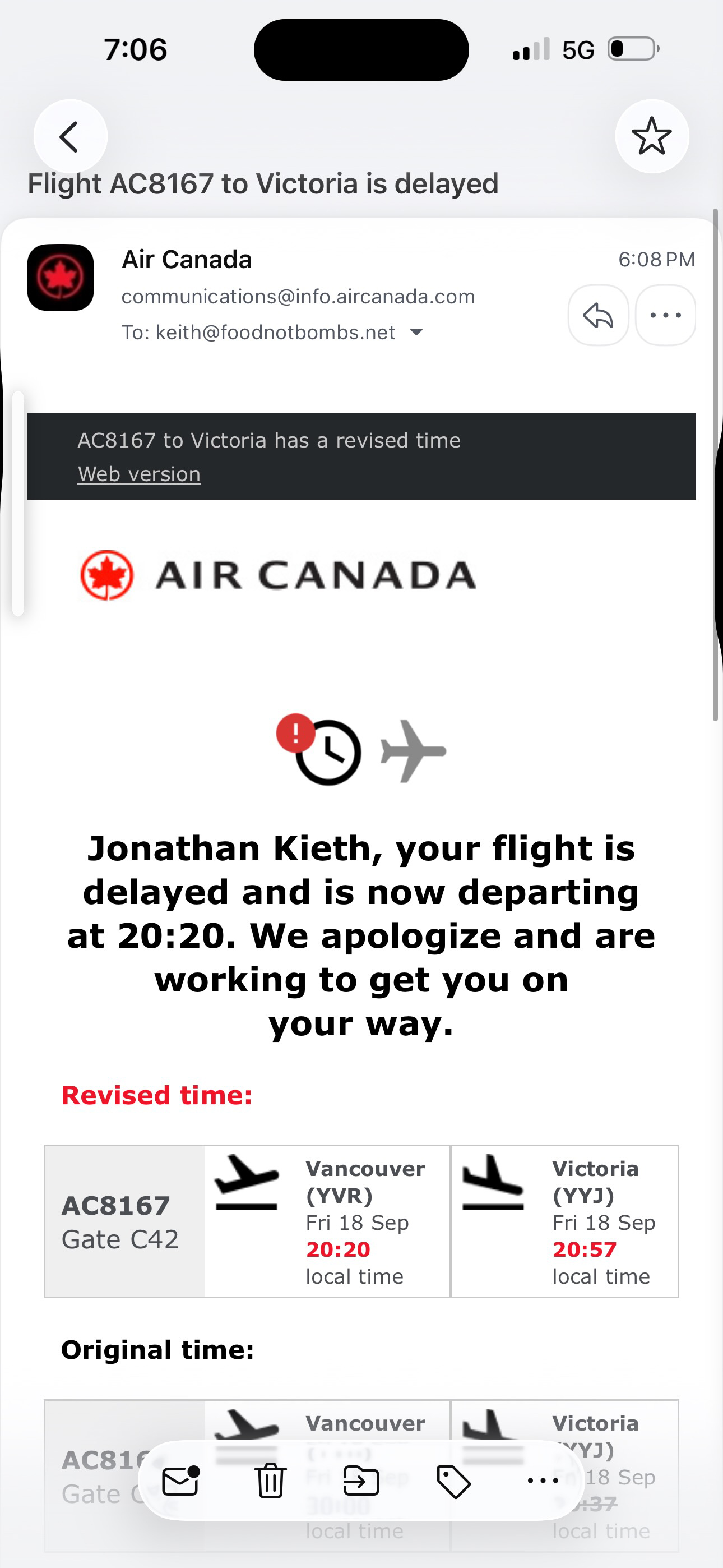
While I was sitting and waiting for the border and customs officer to return from the back room, I got a text from Air Canada saying my flight to Victoria was boarding. The official came back and asked more questions. The next time she returned, she asked if I wanted any food or water and showed me a menu. I requested water, coffee, and their vegetarian sandwich without cheese. They also let me charge my phone. I called my girlfriend, Kathleen, in Santa Cruz to tell her what was happening. She called Allan to let him know that I still hadn’t made it through customs.
The officer was growing more sympathetic with each encounter. When she would return from the back office, I started to greet her with “Fantastic, so they are letting me in,” and she would smile, but there were others in the back room who had other ideas. Kathleen suggested I show them the letter from Amnesty International in which they would declare Food Not Bombs activists “prisoners of conscience” and call for our unconditional release if convicted. I found the document on my phone and showed it to them, but they didn’t seem too interested.
At one point, she asked me about the FBI and its interest in Food Not Bombs. I shared that according to a 2009 U.S. State Department lecture on C-SPAN comparing the people who share vegan meals in the parks with al-Qaeda and asking who was more dangerous, the Obama State Department official claimed that the people sharing vegan meals were more dangerous because they were friendly local community members who were advocating that our taxes should be “diverted from the military to fund healthcare, education and other social services.” He claimed that if Americans were to agree with the vegans, there wouldn’t be enough funding to fight al-Qaeda.
I ate the Tim Hortons sandwich with lettuce and a slice of tomato before she led me to the back room. That officer told me that under Canadian law, they couldn’t let me in because in Canada my “conviction” would be penal code —blah, blah, blah. She told me they would not charge me with a criminal violation of Canada’s immigration laws and would just send me back to the United States.
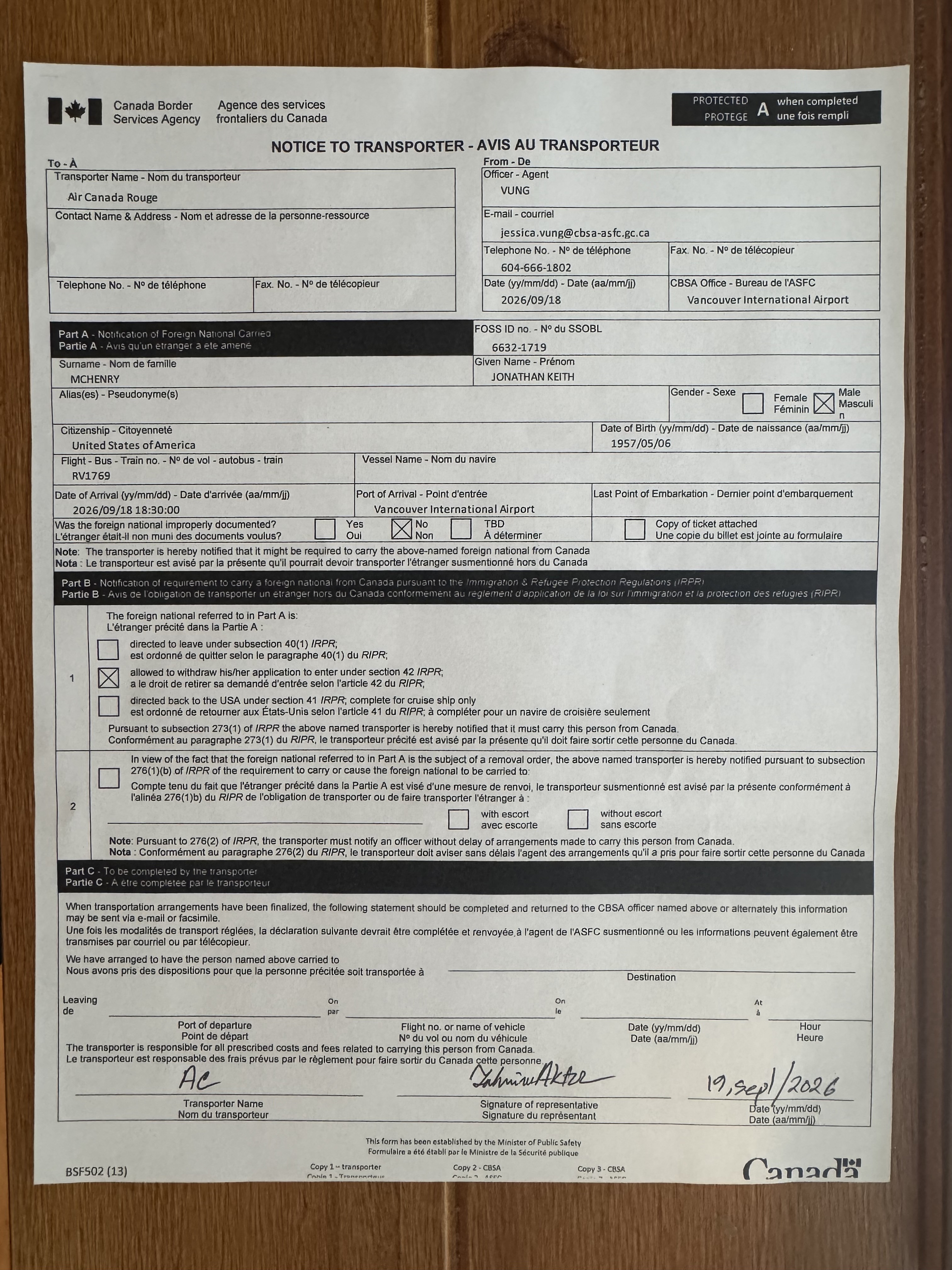
The officer placed two papers in front of me. One was “Allowed to Leave Canada,” and the other said “is a person who is a foreign national who has not been authorized to enter Canada and who in my opinion, is inadmissible pursuant to: Paragraph 36(1)(b) in that there are reasonable grounds to believe is a permanent resident or foreign national who is inadmissible on grounds of serious criminality for having been convicted of an offense outside Canada that, if committed in Canada would constitute an offense under Act of Parliament punishable by a maximum term of imprisonment of at least 10 years.”
Below that, in the section titled “This report is based on the following information,” item 4 stated “Sought entry on 2026/09/18 at Vancouver International Airport for the purpose of speaking at a presentation in Victoria.”
Item 5 read, “Was convicted on 1994-10-28 for Force?ADW Not Firearm:GBI Likely (245(A)(1)PC San Francisco.”
It is odd that they claimed I was convicted on October 28, 1994, since I pleaded out, getting credit for 500 days served in jail to avoid life in prison on February 16, 1995, and the only court appearance of mine in October 1994 was on Halloween. It was a very memorable court appearance because those who came to support me took Halloween candy set out at offices throughout the courthouse and shared the treats with the public to mock the law against sharing food that had placed me in this position.
The Notice of Transporter had the checkbox labeled “allowed to withdraw his/her application to enter under section 42IRPR” checked.
I signed the forms.
They had said that they had to put me on the first flight to the United States, which was leaving for Austin, Texas, at 2:00 a.m., because that was Canadian policy. I asked if Air Canada would fly me to San Francisco from Austin, but that was not possible. I would have to buy my own ticket home. Finally, they agreed to send me on the morning flight to San Francisco.
A security team directed me to remove all my belongings, including my wallet, phone, belt, shoes, and pain medication, and ordered me to stand against the wall with my hands spread out. They frisked me, checked under my hair, and placed me in a chilly holding cell with the lights blazing. I tried to sleep on the metal-ribbed bench, but it was impossible. It would turn out that this aggravated the back injury I had been seeking surgery for, and I suffered level-10 pain for the following two weeks.
The distant clanging of doors and muffled conversations filled me with the dread I remembered when locked up during my days in jail facing the Three Strikes sentence.
Finally, they opened the cell and told me to get dressed. A security woman took me to the ticket desk where papers had to be signed. After that, she led me through the TSA-style security check, then took me to U.S. Customs, where the officer asked why I was being removed. I said for feeding the hungry. After that brief interaction, the security officer walked me to the gate. Following a 30-minute wait, the security officer led me to the boarding agent.
While waiting to board, I spoke with another passenger who it turned out was headed to TrueNorth Health in Santa Rosa, California. I let her know I had done several water-only fasts at TrueNorth and found it very helpful. I shared that my first 23-day water-only fast cured me of 20 years of suffering from fibromyalgia. This seemed to give her hope that she could recover from her autoimmune illness. Sadly, after all the “coincidences” in my life that have turned out to be part of an intelligence operation, I worried this might also be the case, but so far there is no evidence of this, and it was likely one of the many non-state-sponsored events of serendipity that have blessed my life.
There were more papers signed at the gate. I boarded, and a white envelope was handed over to an Air Canada employee. I was tired and in so much pain that I found the flight exhausting.
When I was leaving the plane in San Francisco, an airline attendant handed me a white envelope with legal documents and my passport. I phoned Kathleen to let her know I had landed and headed for the area where Ubers do their pickups. A young man was standing outside his car and I asked if he was an Uber driver. He was, and he was willing to drive me home to Santa Cruz.
My girlfriend, Kathleen, had emailed my emergency contacts while I was in the holding cell. Among those who responded was my friend and one of my lawyers, Randy Baker, who had defended me against the attacks by the government in San Francisco and had filed the civil rights lawsuits that included documents in discovery that provided me with the September 27, 1988, wiretap memo by San Francisco Police Department commander Richard Holder that was used to justify the police beating I took outside the Presidio on October 15, 1988, during a protest against the U.S. war in El Salvador. This is the text of his response to Kathleen’s email.
“Keith is indeed an exemplary man. Few people have allowed themselves to be subjected to the scores — perhaps hundreds — of arrests, and numerous beat-ups that Keith has suffered in the cause of advocating for a society in which our abundant resources are devoted to human needs, rather than to unnecessary wars.
In the course of representing Keith and Food Not Bombs in the early 1990s a letter from the San Francisco D.A. to the San Francisco City Attorney that I obtained in discovery in one of Keith’s suits underscored that law enforcement was not the objective underlying the City’s relentless brutality towards Keith and Food Not Bombs. The letter told the City Attorney to stop the arrests, because his office would not prosecute the cases. Yet the arrests and police harassment continued.
Since Food Not Bombs’ dispensing of free bagels, miso soup and anarchist literature was not threatening public safety, and prosecution was off the table, it became rather difficult to conclude anything other than that the point of the City’s persecution of Food Not Bombs was to stop their highly visible and poignant representation of the insanity of our current system, attracting groups of largely unsheltered people standing in line for food in highly visible venues — along with the message that things didn’t have to be this way.
In light of the City’s clearly speech-suppressive objective underlying its relentless persecution of Keith and Food Not Bombs, I think it virtually unbelievable that the prosecution that resulted in Keith’s convictions cited by Canadian officials was not the result of the City’s presentation of a grossly misleading account of an incident, rather than any felonious conduct on Keith’s part.
Insofar as Canada has relied on those convictions in considering the appropriateness of Keith’s entry into the country, it is grossly mistaken. Canada can only benefit from his presence. The government needs to reconsider its decision to exclude him.”
“Randy Baker
Attorney at Law”
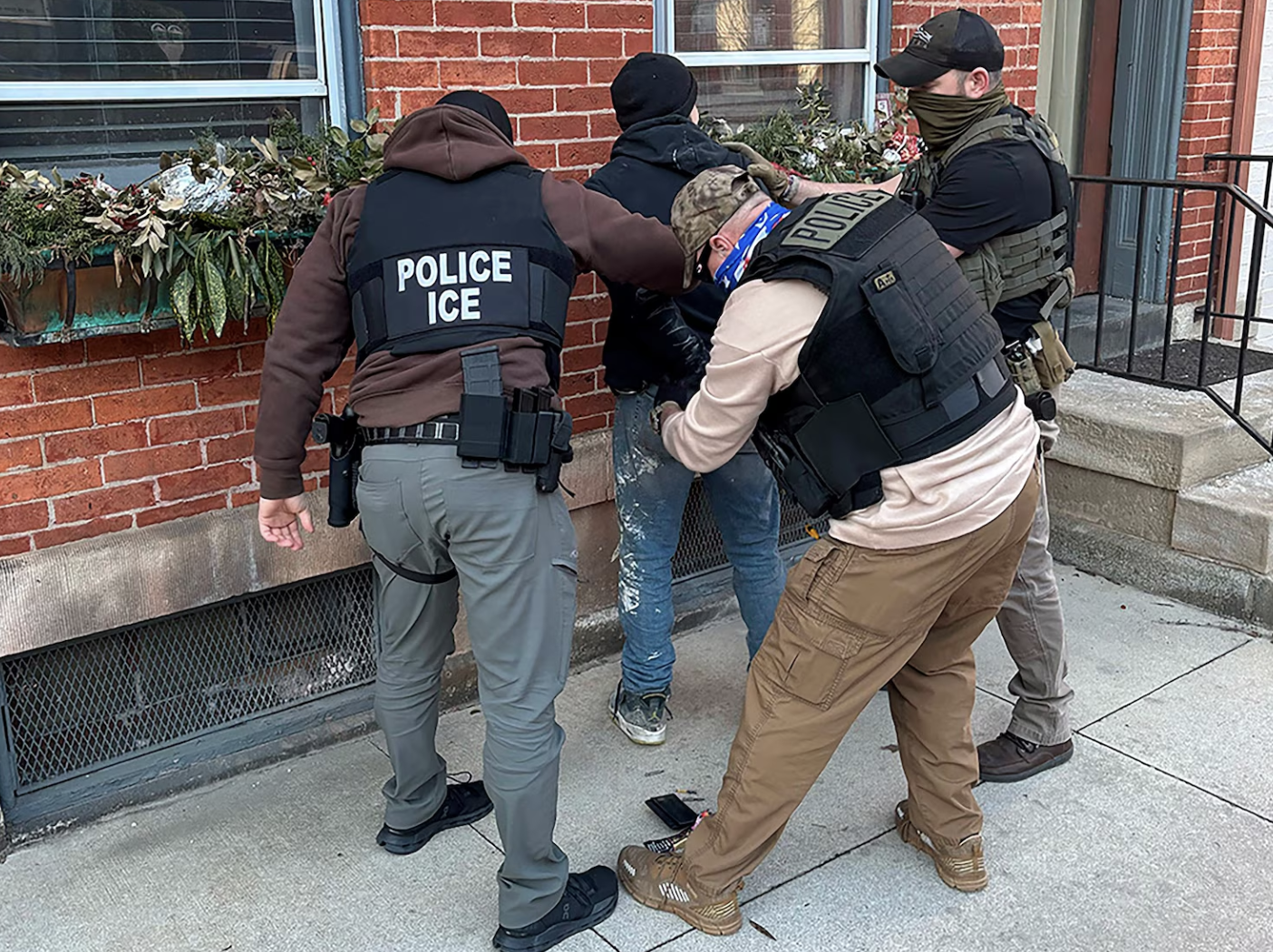
During this ordeal, I often thought of how lucky I was, thinking of all those people captured by ICE, often disappeared from their families and held in horrid conditions for weeks and months before being shipped off to countries with which they often have no connection. Stories like that have been shared by a young Food Not Bombs volunteer in Monterrey, Mexico, who had spent his life in San Antonio, only to be dropped off in a remote area of Mexico and forced to search for his friends who had come to the border to meet him.
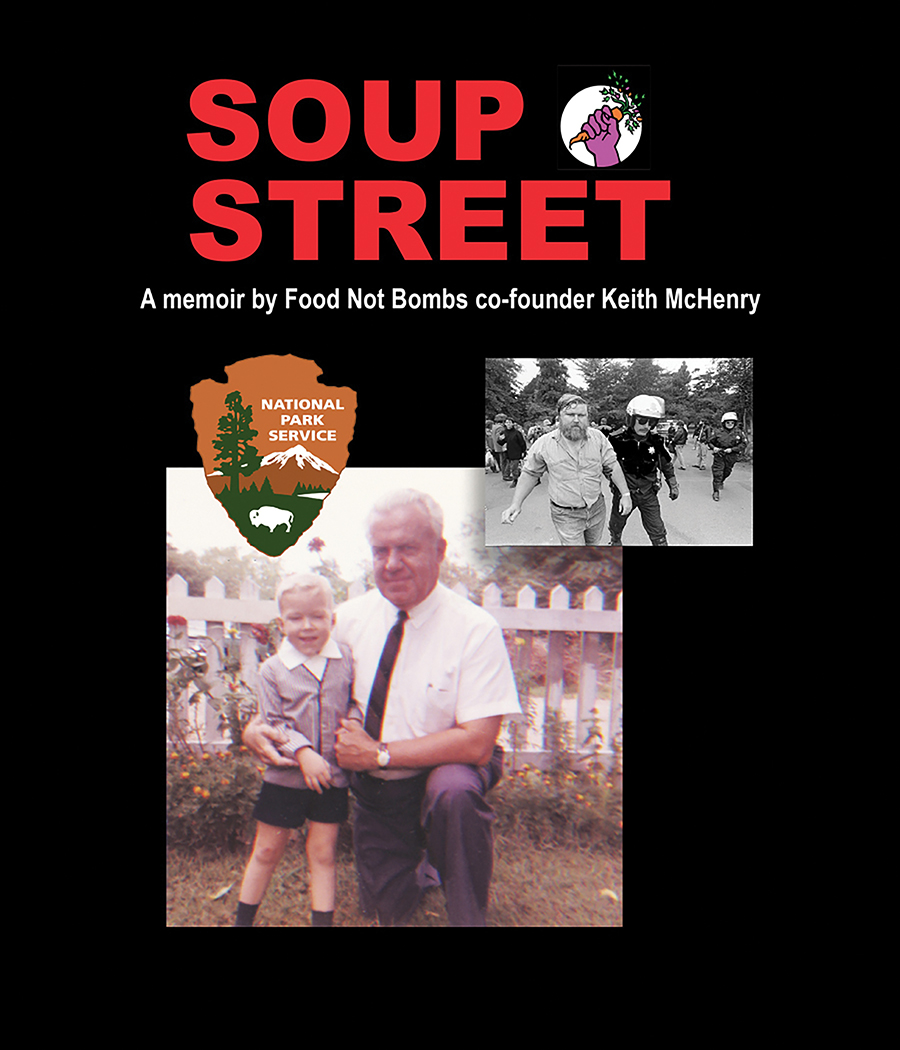
SOUP STREET – A memoir by Food Not Bombs co-founder Keith McHenry
https://foodnotbombs.net/soup_street.html