NO PLACE TO GO
September 2, 2026
The horrific escalation in the war against the homeless of Santa Cruz
I have been sharing food with the homeless for 46 years and I have never been so shocked by what I have witnessed in the city of Santa Cruz, California, this month. The city abruptly increased its campaign of repression against its homeless community in the last weeks of August 2026. What has changed to inspire this sudden escalation? Are city officials removing the homeless from view so Labor Day tourists feel comfortable, or is there another reason? Mayor Fred Keeley didn’t deploy such brutal tactics last year.
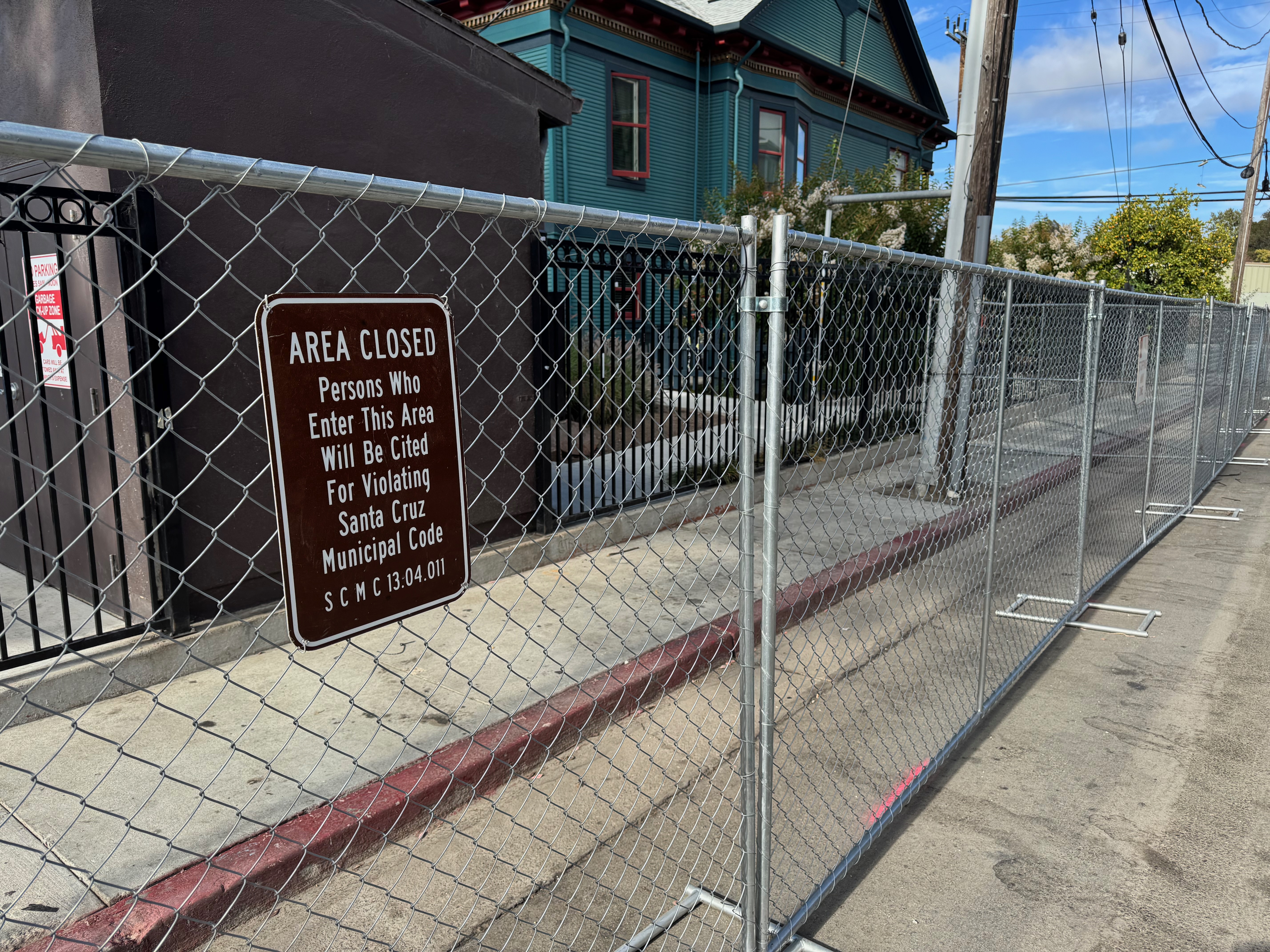
The twice-weekly clearing of the homeless was replaced by the fencing off of the sidewalks on Coral Street opposite the entrance to Housing Matters. They wired metal signs to the chain-link fences threatening to arrest anyone who dared breach the shiny cages.
There has never been enough room at the shelters, even if you were willing to endure the institutional disrespect. The police had been forcing people onto the sidewalks outside the Housing Matters shelter for several years. The city, in cooperation with the shelter, used a $4.5 million encampment resolution grant to drive everyone off Coral Street on most Tuesdays and Thursdays, slashing their pup tents before crushing them into the waiting garbage trucks. Those who escaped with their meager survival gear huddled along the surrounding streets until the assault moved on to eradicate the homeless from other areas of town.
But that torment ended with the installation of the Coral Street fencing, scattering people onto the riverbanks, up into the Pogonip woods, or along the River Street sidewalks leading toward downtown. A group set up home on the San Lorenzo River behind the Tannery or at the end of Felker Street. Others joined their friends on the levee wall across from Trader Joe’s.
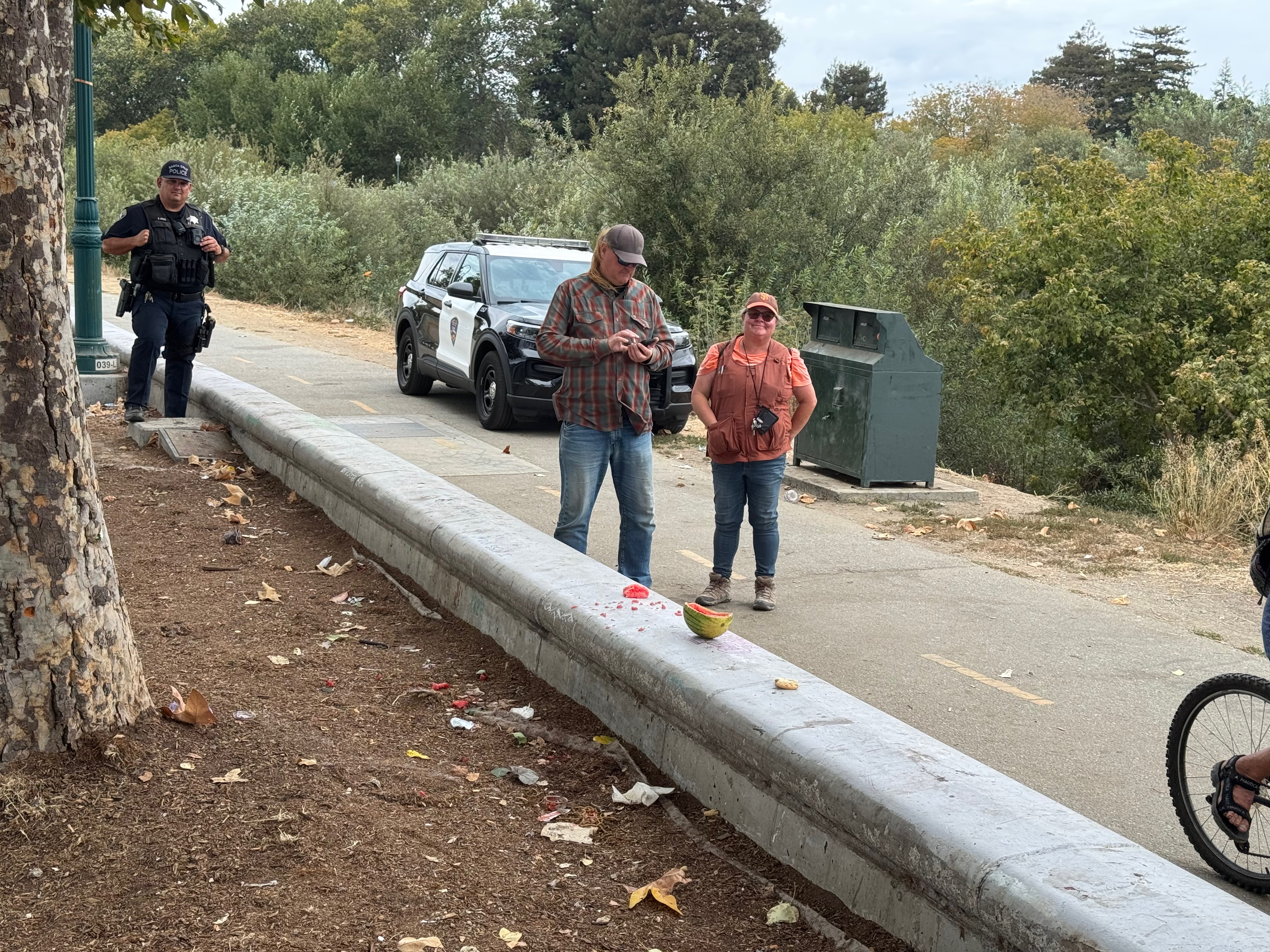
The safety of the levee walkway would be a short-lived refuge. The police started snaking along the paved levee path, stopping at each group to order them to leave, claiming it was illegal to sit. According to Santa Cruz’s finest, people are restricted to walking, jogging, or biking along the public riverway.
I first noticed this on Sunday, August 22, 2026, at around 9:30 when I saw two Santa Cruz police vehicles parked on the levee above the Gateway Plaza. The officers were forcing the last few homeless people off the walkway. By 10:30 a.m., every homeless person had been driven off the levee from the Highway 1 bridge to Warriors Stadium.
On August 27, I was walking to get my car at the parking lot outside Trader Joe’s. Several of my unhoused friends stood at one end of a row of parked vehicles, surrounded by their belongings. I noticed that three police vehicles were up on the levee. I walked over to take a closer look. They were driving the last few people from the ledge. As I snapped a few photos, one of the officers started barking orders at me.
“Get off the planter or I will arrest you,” he angrily yelled.
This “planter” was just some dirt, twigs, and the items discarded in the hasty escape of the homeless, strewn between the curb of River Street and the top lip of the levee wall. City employee Jeramy Leonard was talking with one of the victims, possibly sending them to the shelter that he gatekeeps, replacing someone he had already planned to kick out. This is a strategy used by the city to claim they are providing shelter to those they are rousting off the streets.
I visited with a group of the displaced who had moved outside the abandoned FedEx shop.
“They kick us out every day,” an exhausted woman shared. A few minutes later, a security guard told us we couldn’t gather on the sidewalk. I let him know that this was America and I wouldn’t be going anywhere. He moved on.
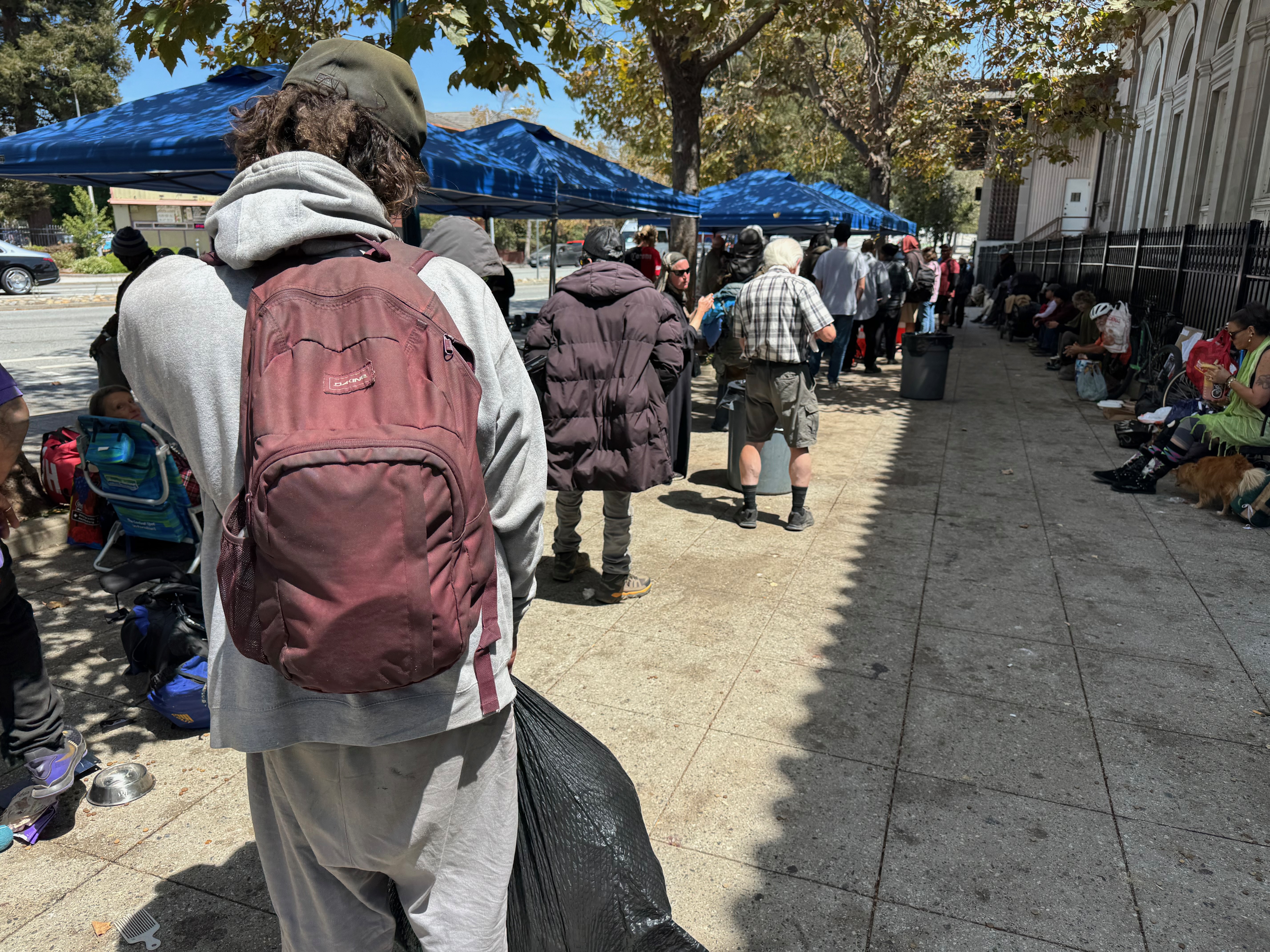
The police aren’t limiting their campaign to Coral Street and the levee. As soon as the Food Not Bombs volunteers had packed away our equipment after the Sunday meal, the police arrived, ordering those who were lingering to scatter.
This dramatic assault on the homeless community is so dire that it suggests city officials are preparing for something not yet announced. It is possible that with the failing economy, local leaders are taking these measures to encourage as much tourism as possible, but there could be more to this repression. The people who run Santa Cruz are at the top of the CIA-connected companies like Google, Meta, and Palantir. They may know something that they are not sharing with the public. I have been sharing food with the homeless in Santa Cruz since 2013, and I have never witnessed such a sudden increase in repression of the unhoused, not even before holidays. Something is up.
Are they trying to get ahead of a huge increase in homelessness due to the collapse of the economic system? Maybe they are trying to send a message to the community that if you join the ranks of the unhoused, you had best leave town. Or maybe the techno-fascist vulture capitalists who own Santa Cruz believe they can increase the value of their 40 high-rise condo investments by sanitizing our once-beautiful city of the people they consider unsightly.
Santa Cruz County released its annual point-in-time count report on August 5, 2026, showing a 12% increase in the number of people experiencing homelessness since 2025, to a total of 1,648 people. The number of people in Santa Cruz who are homeless is much higher, but the fact that city officials are admitting an increase may indicate that they are aware that to “solve the problem of homelessness” they need to start driving people out of sight while the numbers are still relatively low.

The poverty is likely to get much worse. Talk among economists of a depression is growing. A huge increase in the number of people living on the streets in one of America’s most expensive rental markets is not hard to imagine.
More than 4.5 million Americans have lost access to the Supplemental Nutrition Assistance Program (SNAP), formerly known as food stamps, since the passage of the federal One Big Beautiful Bill Act. Money that families would have used to pay their rent might now be needed to pay for food. Living that close to the margin may send many of those millions without food stamps onto the streets.
The war of choice against Iran is contributing to an already teetering economy. Shipping data shows traffic through the Strait of Hormuz dropped to just a single commodity vessel on August 24, marking the lowest daily volume recorded since May 7, 2026. Before Israel and the United States attacked Iran, between 120 and 140 ships passed through the strait every day. Roughly 20 million barrels of oil passed through the waterway daily. This accounted for about 20% of the world’s total petroleum and liquefied natural gas (LNG) supply. According to the Trump administration, the Strategic Petroleum Reserve has less than 40 days left. Trump’s manipulation of the oil price is about to run into reality.
The blockade has also caused an increase in the price of fertilizer, and as a result, the cost of food will continue to increase. The war in Ukraine is also reducing the amount of food reaching the world market. Le Monde reports, “The ports in the Greater Odesa area handle 90% of grain shipments. Since early August, the country has exported only about 500,000 metric tons – nearly one-fifth of its potential – according to Agriculture Minister Taras Vysotskyi.” In 2025, “more than 1 in 3 working-age adults used credit cards to buy groceries — and many of them had trouble paying them off,” according to The Washington Post.
Another cause of the increase in food prices is the disruption in access to the raw materials needed to produce fertilizer. The Persian Gulf region accounts for roughly 41% of global urea exports, 28% of ammonia, and 26% of phosphate rock. Roughly 70% of U.S. farmers cannot afford all the fertilizer they need because the conflict with Iran effectively closed the Strait of Hormuz. Polls showed that 41% of Americans said they were concerned about being able to afford groceries over the next few months, up from 24% in April, according to a report on ABC.
At the same time, Tel Aviv and Washington’s war on Iran is harming economic trust in the United States as a safe place to invest. The use of sanctions isn’t helping. Holding your money in a U.S. bank could result in it being confiscated. The U.S. is still holding billions of dollars seized from Iran when their puppet government fell in 1979. In August 2026, Secretary of the Treasury Scott Bessent gave investors instructions to stop selling U.S. bonds on three occasions. “But they continue to sell them,” Bessent complained, saying that the U.S. Treasury has $1 trillion and is prepared to use it to purchase long U.S. bonds. The last time the U.S. Treasury was forced to use “yield curve control” was during World War II.
The stock market is dominated by investments in artificial intelligence. Reporter Eric Esposito of MoneyWise writes in his August 26, 2026, article that “One of Burry’s long-standing arguments for shorting AI stocks like Nvidia is that their demand is more about circular financing than genuine sales to customers. As The Street reported, Burry characterized these deals as ‘byzantine financing arrangements’ that create ‘a distorted view of the data center boom.’” The web magazine 24/7 Wall St. says, “Burry isn’t merely warning that some AI stocks are overpriced. In May, the investor who famously bet against the housing bubble called today’s AI boom ‘just an asset bubble, plain and simple,’ comparing it with the dot-com era.” The principal customer for AI, and the source of the billions being spent on AI data centers, is the United States government and its security and military agencies. The circular financing of the “Magnificent Seven” tech companies—Alphabet, Amazon, Apple, Meta Platforms, Microsoft, Nvidia, and Tesla—is already threatening to pop the tech bubble. When your primary customer is borrowing its own money to pay off its debt, there is little hope of avoiding a Really, Really Great Depression.
The community hovering around the “Magnificent Seven” has an oversized influence on Santa Cruz. Was the mad dash to build sterile high-rise luxury condos an effort to park hard assets during a crash they knew was coming? Were these ugly towers with limited parking tossed up in a race to beat the financial collapse? Were the buildings intended as collateral, providing something of value after the dust settles?
One thing that is almost certain is that those tech billionaires who are tormenting the homeless from corner to corner won’t be living in any of these ghastly monstrosities themselves. No fifteen-minute carless Smart City for them. They will let the tech peasants catch Google’s self-driving Waymo surveillance vehicles or zip off a high-rise rooftop in a Joby flying taxi.
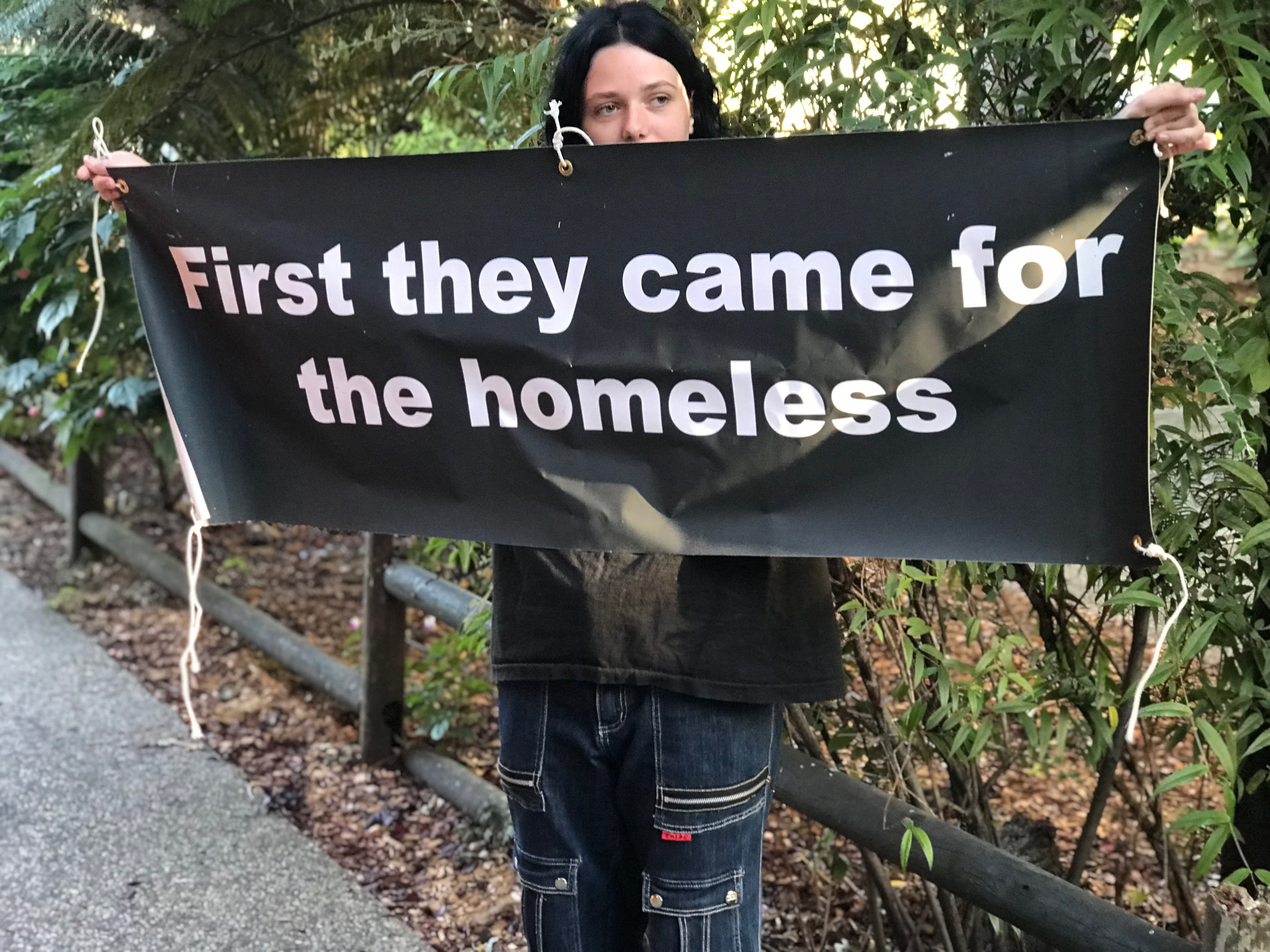
I think we should take this seriously. First they came for the undocumented, deploying ICE brutes to snatch people off the streets and from their workplaces, stuffing them into massive concentration camps or flying them off to far-off countries. Our homeless neighbors are likely next to be removed to the reform camps.

Utah has proposed building a 1,300-bed facility northwest of Salt Lake City in response to President Trump’s executive order “Ending Crime and Disorder on America’s Streets.” Trump mimicked aspects of California Governor Newsom’s executive order, which mandates that state agencies and departments adopt policies to clear camps on state property. It also encourages local governments to do the same. Newsom signed the executive order a month after the Supreme Court reversed the precedent in Grants Pass v. Johnson that protected the homeless from being criminally charged if the jurisdiction was unable to provide a safe place for people to be. The justices found that it is not unconstitutional for a city to ban homeless encampments, even if there is no shelter available. The ruling, which Newsom cheered, gives city leaders broad authority to crack down on camps.
Under a yet-to-be-approved proposal drafted by Randy Shumway, chair of the Utah Homeless Services Board, the campus would include a “certified community behavioral health clinic” with 300 to 400 beds reserved for people who are civilly committed — or court-ordered into mental health treatment.
“An individual would be sanctioned to go there. It would not be voluntary. They would be there for a period of probably 90 days with the opportunity to detox in order to get mental and behavioral health care, to get substance use disorder support, to get physical health care, and to be surrounded by a community that’s helping them in healing,” Shumway told the committee while presenting his proposal.
Some local political leaders and the ACLU of Utah are pushing back. “Utah’s plan to confine people who cannot afford rent in a government-run homeless detention camp demands national attention,” notes Rep. Maxwell Frost.
Those being pushed from corner to corner in Santa Cruz may find themselves sanitized into a barracks at Camp Roberts, two hours south of the city, or institutionalized in a psych ward. Mayoral candidate Ryan Coonerty, the co-founder of the Predictive Policing software targeting the families of Gaza, Lebanon, Russia, and Iran, claimed during the Lookout.co candidates’ night at the Paradox that the county had reduced homelessness by fifty percent and that the remaining homeless were “service resistant.” When Coonerty was on the Santa Cruz County Board of Supervisors, he met with Mayor Donna Myers at what they called a 2-by-2 meeting and suggested that the homeless be shipped to the California National Guard base outside San Miguel. There will be no freedom for those who are unable to afford an apartment.
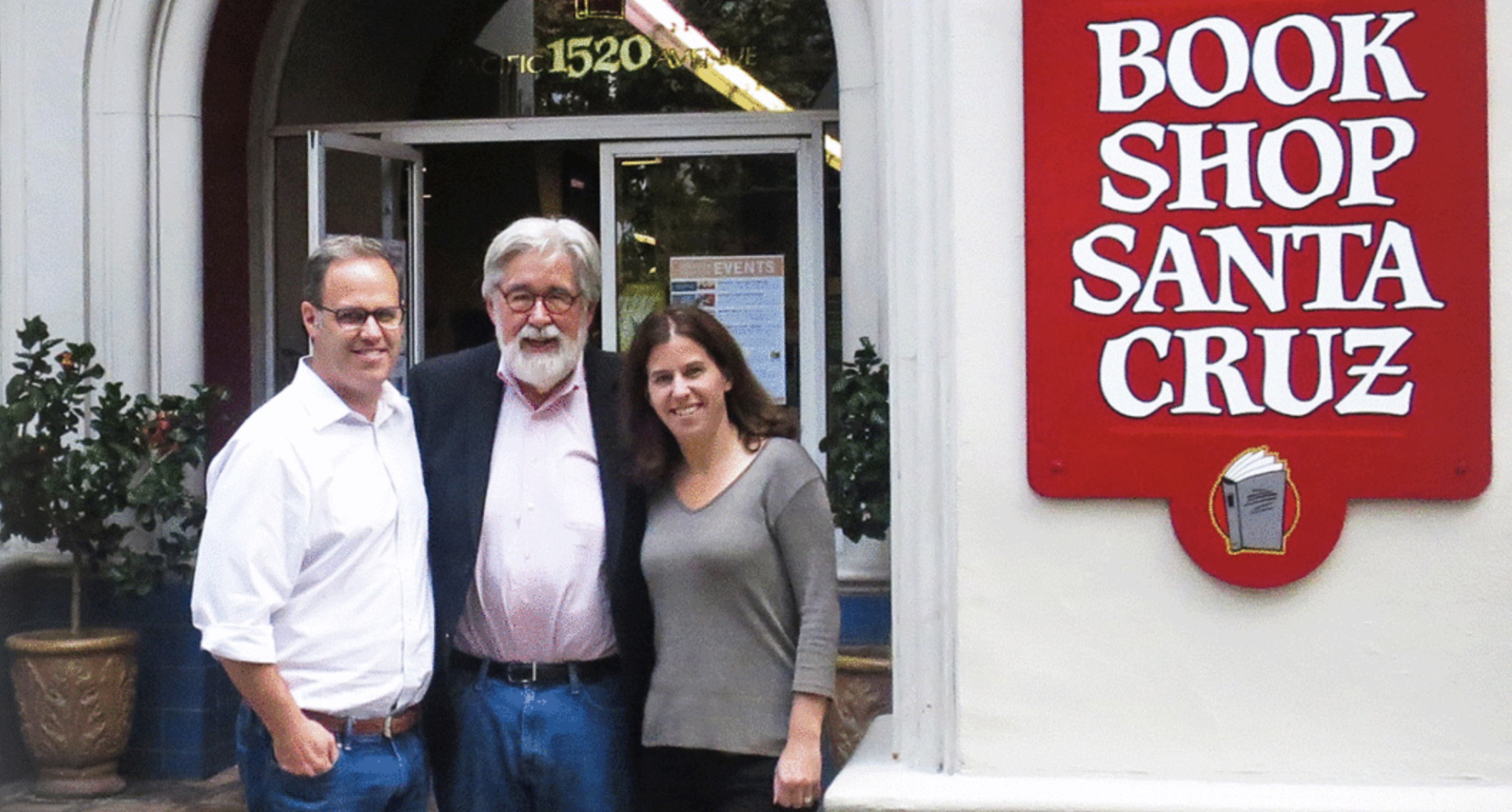
Coonerty currently serves as a senior policy advisor to San Jose Mayor Matt Mahan. Google co-founder Sergey Brin, Palantir co-founder Joe Lonsdale, and Y Combinator CEO Garry Tan are among the Silicon Valley elite who maxed out their legally allowed contributions—$78,400 each—to Mahan’s gubernatorial campaign in January.
In a Guardian article from March 2024, “Revealed: A California city is training AI to spot homeless encampments,” reporter Todd Feathers writes “for the last several months, a city at the heart of Silicon Valley has been training artificial intelligence to recognize tents and cars with people living inside in what experts believe is the first experiment of its kind in the United States.”
Coonerty’s connections to Silicon Valley tech-fascists should concern anyone with compassion for the homeless. Joe Lonsdale not only co-founded Palantir with Peter Thiel; he started the public policy think tank The Cicero Institute. The Cicero Institute provided state and city governments with legislative templates designed to criminalize the homeless. More than 20 states are proposing laws criminalizing the homeless. The Cicero Institute succeeded in passing its template in Texas, which includes a statewide camping ban with penalties of up to $5,000 and one month in jail. Cicero also supported a bill (not based on one of its templates) making camping a felony in Tennessee.
Ryan Coonerty’s boss, San Jose Mayor Matt Mahan, unveiled his “Responsibility to Shelter” initiative in March 2025, under which homeless people who choose not to accept shelter after three attempts within an 18-month period would be subject to arrest for trespassing. San Jose passed its “Responsibility to Shelter” ordinance on June 10, 2025, requiring unhoused residents to accept available city shelter or face citations and potential arrest. The San Jose police have not published the number of people arrested under this law. A March 2025 article in the San Jose Spotlight reports, “There are roughly 6,340 homeless residents in San Jose, with about 5,550 being unsheltered.” That same story says the city plans to open 1,000 shelter “beds” to respond to the law.
The August 22, 2026, The Washington Post article “How a Billionaire Shaped Trump’s Homelessness Policy” described one of Mayor Mahan’s supporters: “A co-founder of Palantir, the data-mining firm, Mr. Lonsdale, 43, is an unlikely force in homelessness policy. He brings to it vast wealth but no experience with homeless services and a distrust of conventional expertise. He argues that his outsider’s perspective gives him and the young generalists he hires a fresh view.” Joe Lonsdale claims the homeless are mentally ill or addicts and should be criminalized, yet a study by UCLA shows that nearly 300,000 California K-12 students experienced homelessness in the 2024–25 school year, a new statewide high and a 10% increase from before the pandemic.
Thankfully, the tech-feudalists of Santa Cruz may be blind to the fact that their efforts will not crush the human spirit. While there are no plans to exterminate the homeless in death camps as the Germans did in response to their economic crisis, this kinder and gentler approach to criminalizing the homeless is inching our society down that path.
First they came for the homeless
And I did not speak out
Because I was not homeless.
Then they came for me
And there was no one left
To speak out for me.
But this time we know better. We are speaking out.
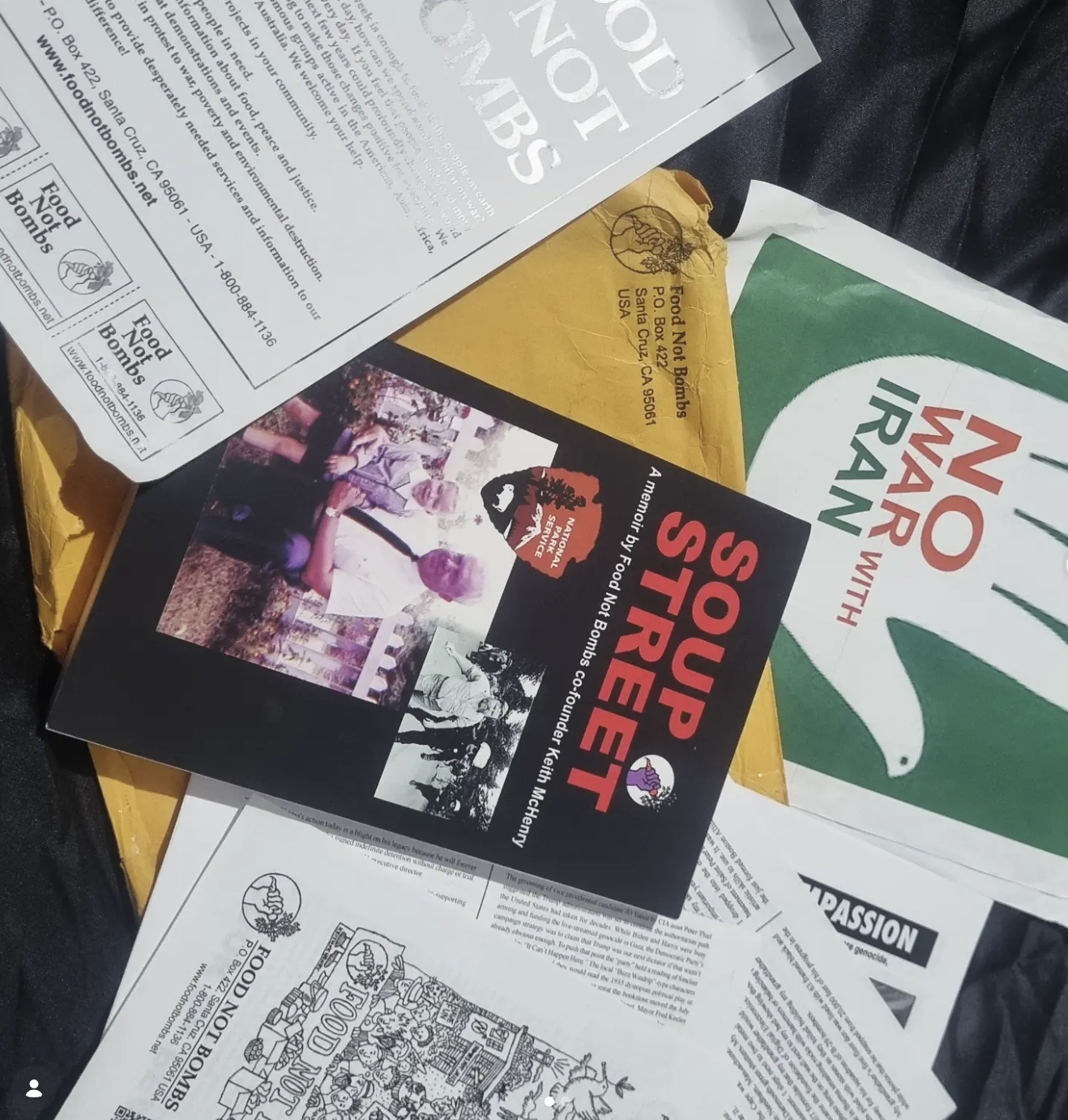
Soup Street – A memoir by Food Not Bombs co-founder Keith McHenry
https://foodnotbombs.net/soup_street.html
Keith McHenry

