A REVOLUTION OF COMPASSION
June 30, 2026
Celebrating the 250th anniversary amid the ashes of the U.S. Constitution with more genocide, mass surveillance and long prison sentences for the crime of caring.
The eighteen-year-old James McHenry wobbled down the damp wooden gangplank, tightening his tri-cornered hat against the brisk Philadelphia breeze. He would be the first of my family to set foot on the shores of America. The bitter smell of rotting fish heads and the angry squawks of seagulls battling over an unguarded bucket of oysters greeted the young man from Ballymena, County Antrim, west of Belfast, Ireland. He secured a wagon and headed off to Newark, Delaware, for two years of college before returning to Philadelphia to study medicine with Dr. Benjamin Rush.
McHenry joined Rush and the Sons of Liberty at a local tavern, lifting pints and smoking long-stemmed clay pipes of Virginia tobacco as they discussed resistance to King George’s occupation.
On April 19, 1775, the King’s army came under fire from colonists on the greens of Concord and Lexington, Massachusetts. Down in Philadelphia, the Sons of Liberty agreed to help with the plan to fortify Bunker Hill in Charlestown in an attempt to block a second effort by the British to confiscate the armories west of Boston. Dr. Rush recruited the 22-year-old McHenry, asking him to prepare a Flying Hospital for the battle. On June 17, 1775, the colonists and British clashed on the south sides of Breeds and Bunker Hill.
Colonists carried the injured to McHenry’s field hospital, where his team treated 305 wounded combatants. The British killed 138 colonists that day. When George Washington joined McHenry to survey the injured and praised them for their sacrifice, they hit it off, starting a lifelong relationship.
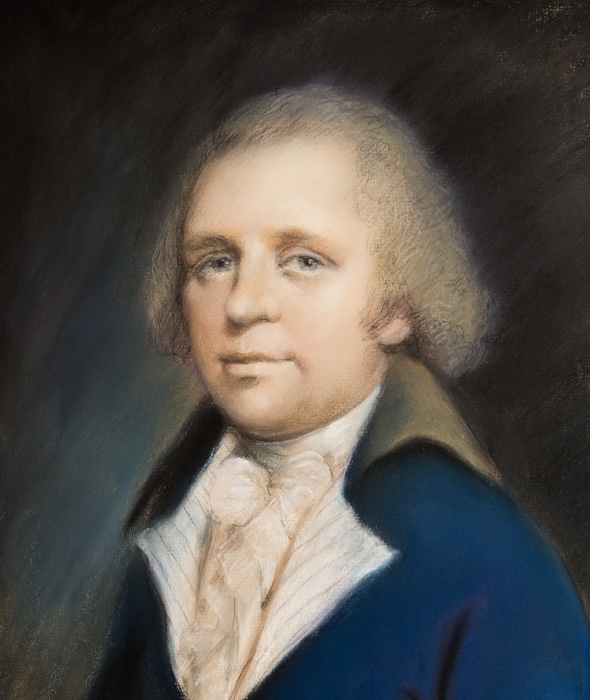
By coincidence, I would help start Food Not Bombs two centuries later, when I was also 22 years old, at a house about a 15-minute walk from where James McHenry set up his Flying Hospital on the flats of Cambridge. He was designated as a terrorist. I would share that title two centuries later.
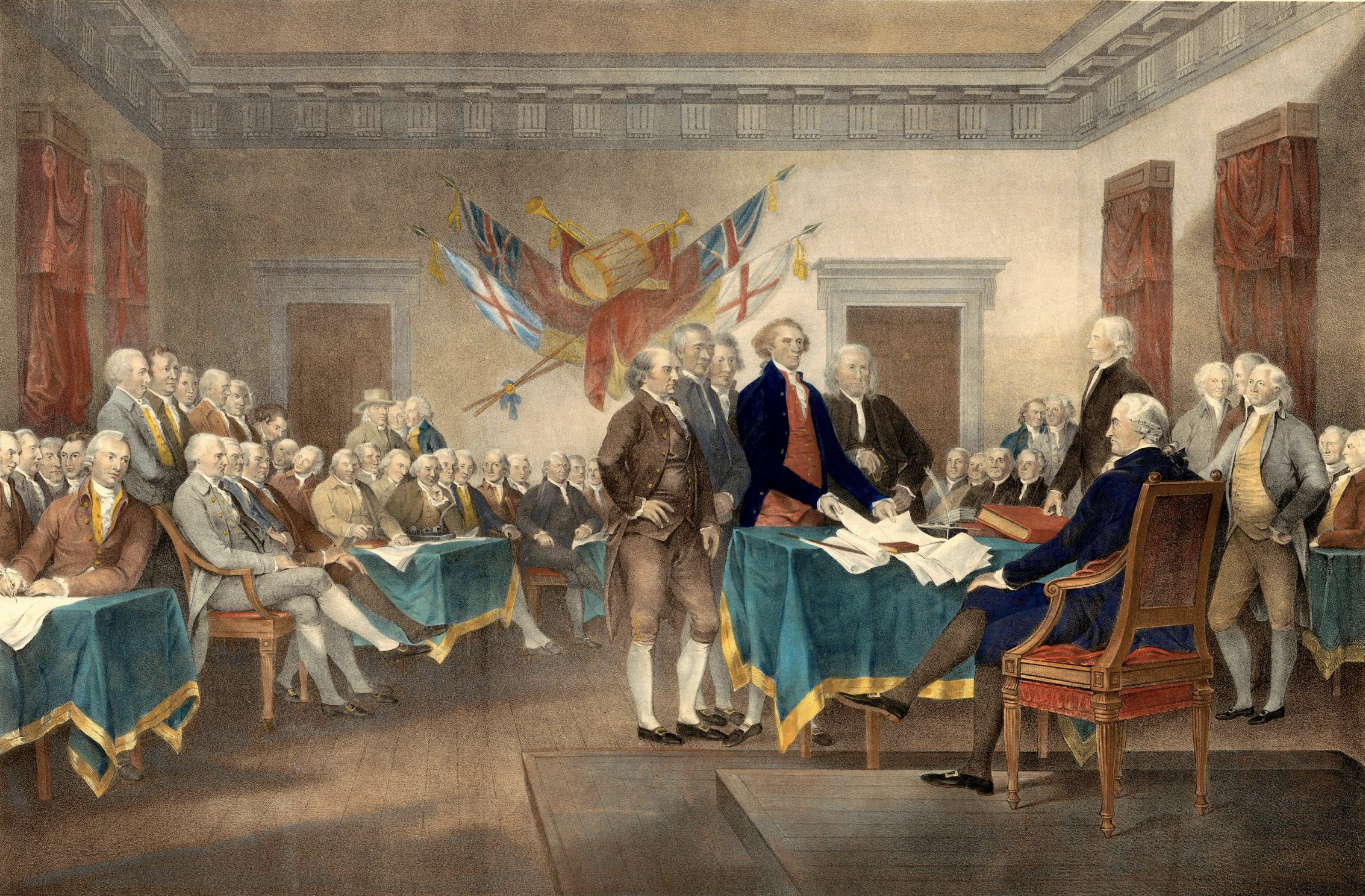
On July 4, 1776, the Declaration of Independence was adopted unanimously by the Second Continental Congress at the stately brick Pennsylvania State House in Philadelphia. When the Liberty Bell rang out the news that hot, muggy day, McHenry was there to cheer his approval with the defiant crowd. The Declaration of Independence includes “He [ King George] has excited domestic insurrections amongst us, and has endeavoured to bring on the inhabitants of our frontiers, the merciless Indian Savages whose known rule of warfare, is an undistinguished destruction of all ages, sexes and conditions.” The Palestinians of their time.
McHenry became the surgeon of the 5th Pennsylvania Battalion and was captured at Fort Washington, NY, later in 1776. McHenry was incarcerated on a British ship docked on the Hudson, providing medical attention to his fellow prisoners. Dr. McHenry was paroled in January 1777.
He officially joined Washington’s staff in May 1778 as a volunteer “without any emolument.” Dr. McHenry served as a well-liked and loyal member of Washington’s “military family” until August 1780, when he was assigned to Lafayette’s staff. McHenry attended the surrender of British General Cornwallis in Yorktown, Virginia, in 1781, after which he resigned from the army to return to private life.
During the harsh winter of desperation at Mount Vernon, Washington wrote:
“McHenry’s easy and cheerful temper was able to bear the strain which we suppose must sometimes occur between two persons thrown so closely and so constantly together in a position of social equality and military inequality.”
After the defeat of Britain, McHenry was elected to the Maryland Senate, served as a delegate to the Continental Congress, and was a Maryland representative to the Constitutional Convention. He introduced the clause in Section 9 of the U.S. Constitution, “No Bill of Attainder or ex post facto Law shall be passed,” and inked his signature on the document with the other 38 on September 17, 1787.
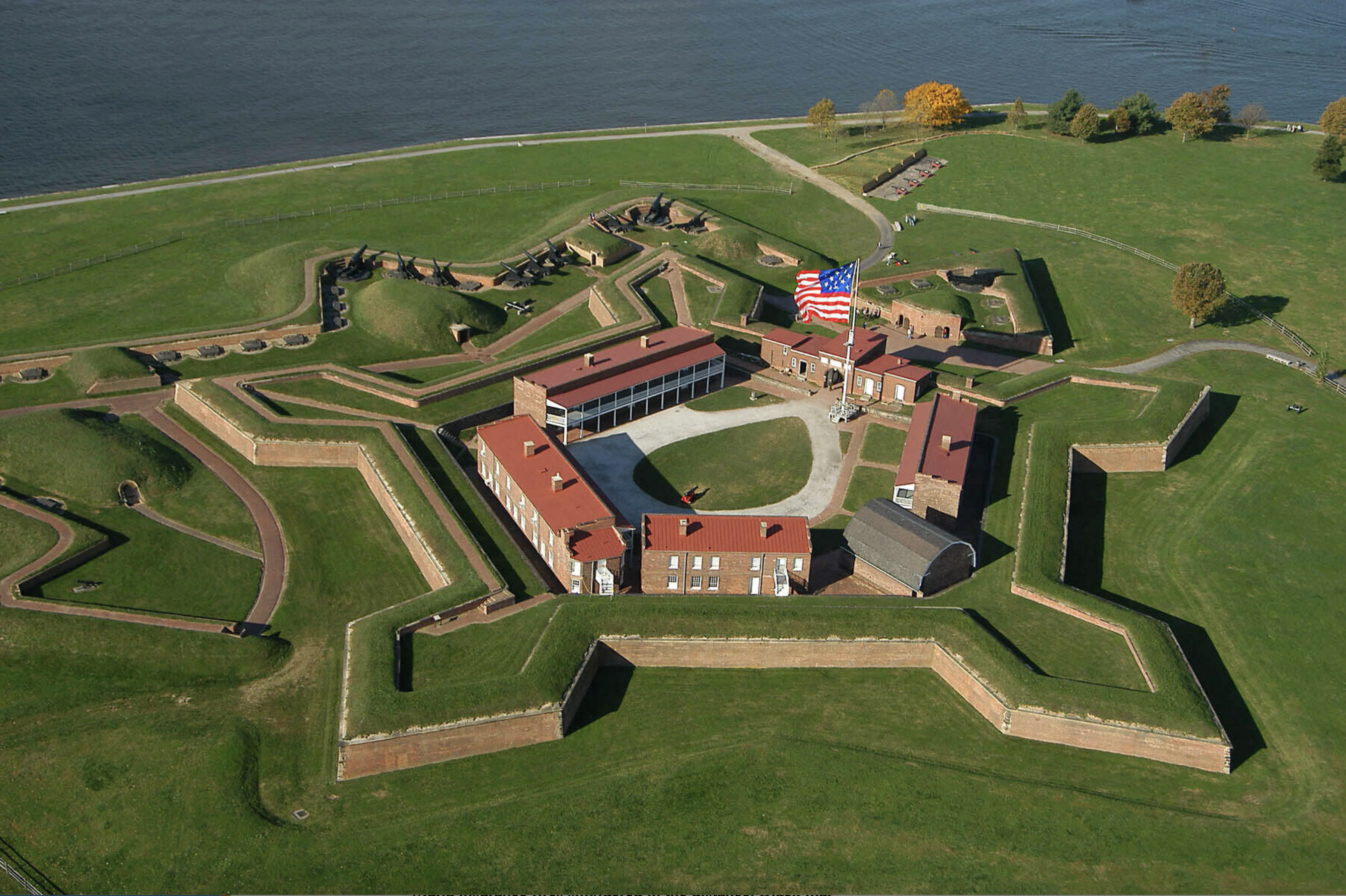
My ancestor was a political ally of Washington and served in his cabinet as the Secretary of War from 1796-1800. He was tasked with Indian removal as desired in the Declaration of Independence and directed business to his associates with the construction of a huge brick fort to protect the harbor of Baltimore starting 250 years of defense contractor fraud. Fort McHenry was named for him while he was alive. Genocide and weapons procurement corruption are a feature of the Empire.
On the morning of September 14, 1814, after a night witnessing the bombardment of Fort McHenry, attorney Francis Scott Key penned the poem that would become the country’s national anthem, “The Star-Spangled Banner.” James McHenry’s first son was stationed at the fort during the battle. The doctor was able to watch the “bombs bursting in air” from his 95-acre farm, Fayetteville, named after his French companion Lafayette. He would die at the Baltimore estate in 1816.
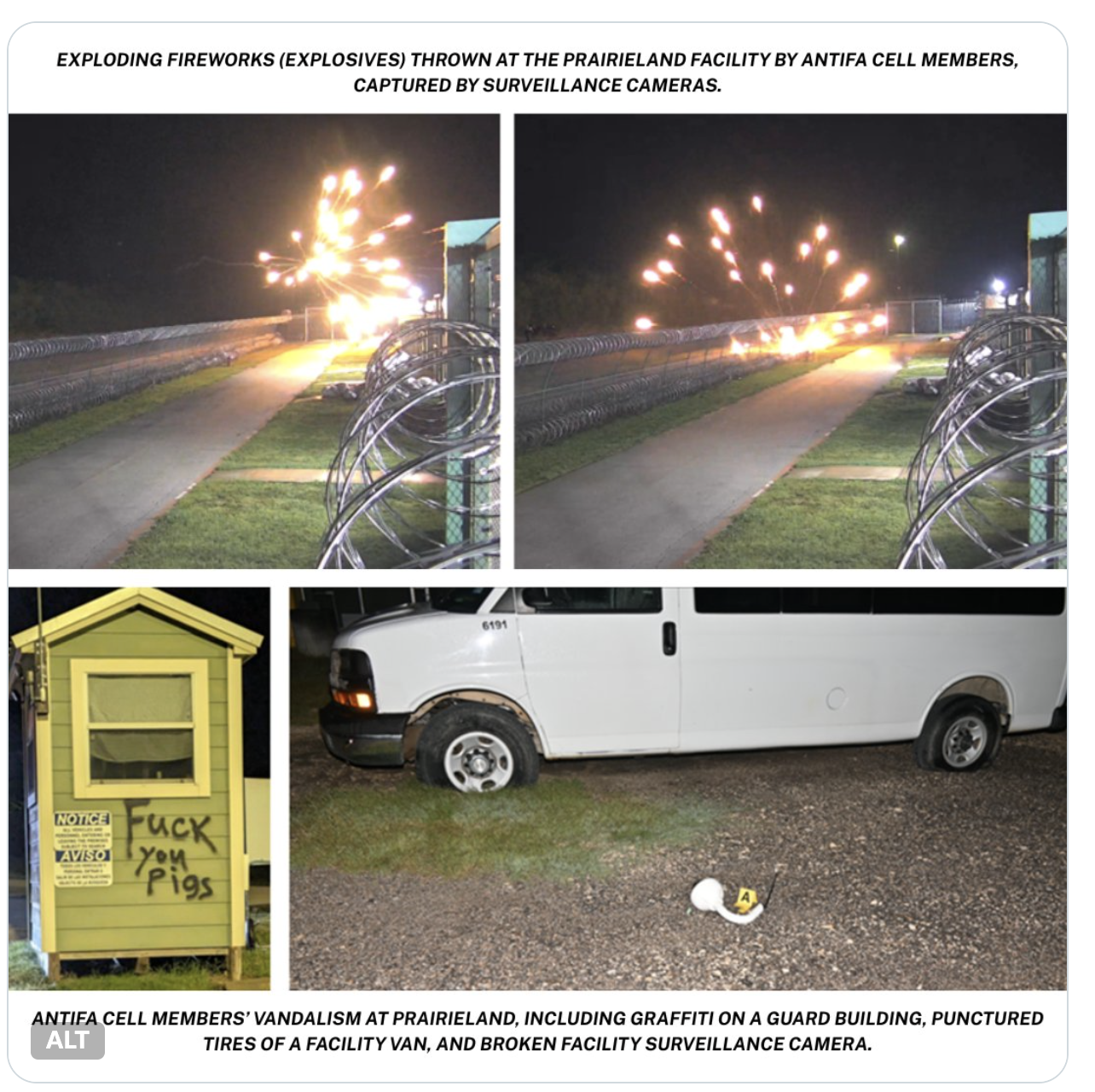
As the United States of America celebrates the 250th anniversary of the signing of the Declaration of Independence, the country is in the process of losing two wars. and the liberties championed in the Declaration of Independence. Flakes of constitutional ash from what was the First Amendment right to protest blew in the winds with the effective life sentences of the passionate anarchists connected to the 2025 Independence Day noise protest outside a North Texas prison. Compassionate young people who wanted to show love and solidarity with the families were interned at the Prairieland Detention Center in Alvarado, Texas.
The Fourth Amendment of the Constitution McHenry signed no longer protects “The right of the people to be secure in their persons, houses, papers, and effects, against unreasonable searches and seizures, shall not be violated, and no Warrants shall issue, but upon probable cause, supported by Oath or affirmation, and particularly describing the place to be searched and the persons or things to be seized.”
It couldn’t be more obvious that the right to freedom of the press and the right to protest are under threat with the arrest of Prairieland defendant Daniel “Des” Sanchez Estrada for the “crime” of moving anarchist zines from his home to a friend’s house, which federal prosecutors claimed was an effort to conceal evidence of a conspiracy.
A thirty-year sentence for moving literature of someone who wasn’t even at the protest and decades more for those who did attend was meant to send a message. Chief District Judge Reed O’Connor said he was ordering the maximum allowed in each case because “the state wants to send a message to anyone who shares a similar ideology.”
President Donald Trump’s National Security Presidential Memo 7 instructs the Department of Justice to target anyone holding “anti-American,” “anti-Christian,” and “anti-capitalism” beliefs. Earlier this month, Trump’s counterterrorism czar, Sebastian Gorka, released a public counterterrorism strategy claiming that left-wing extremists are one of the three top counterterrorism priorities facing the United States. With the increase in protests against AI data centers and Flock cameras, the new category of Anti-Tech Violent Extremists has been added. The Prairieland case is the first to be prosecuted under Trump’s September 25, 2025, NSPM-7, “Countering Domestic Terrorism and Organized Political Violence,” presidential order. You could be next.
Those opposed to this massive violation of our privacy are now under threat of long prison sentences. Over 4,000 massive AI data centers have been constructed across the United States, aiding in mass surveillance. Miles of Flock cameras and Kill-Switch cars are reporting our every move. “Citizens will be on their best behavior because we are constantly recording and reporting everything that’s going on,” Oracle’s Larry Ellison promised his investors on September 24, 2024.
Thankfully, a revolution of compassion is sweeping the globe. People care for one another. From helping change a stranger’s flat tire, to sharing a sandwich with a homeless fellow, to protests against the cruelty of ICE and the genocide, most Americans want the best for one another.
An uncrushable human spirit is defying the attempt by billionaire Zionists to imprison us in their dystopian digital panopticon. Community opposition blocked or delayed $98 billion in U.S. data center projects between March and June 2025, and the pushback is increasing. Politicians who support the genocide are confronted in cafes and on the streets. California Senator Scott Wiener was chased out of a Trans rights rally for legislation he pushed to silence those of us who support an end to slaughter of Palestinian families.
One indication that compassion is growing is the number of times people contact me to announce the formation of a new or expanded Food Not Bombs chapter.
The arrests, torture, and designation of Food Not Bombs as “one of America’s most hardcore terrorist groups” in the late ’80s and early ’90s have not deterred the volunteers. Instead, the repression has only served to inspire a movement that is active in over 1,000 cities in at least 70 countries.
My inbox fills with requests to have their group added to the www.foodnotbombs.net locations map. In just one day, people in Phoenix, AZ; Fayetteville, NC; Gaza; Okaloosa, FL; Warsaw, Poland; and Houston, TX, requested updates.
That same day, I got news from Europe: “Hi! I wanted to let you know that there are two more collectives that volunteer in Warsaw. There’s one at ADA Puławska (Puławska 37, Warsaw). They’ve been around for a few years. They share food every Friday at 5 PM at said address. They’re called “Obiady u Ady”. Not sure if they have an email or a phone number.”
“And another one is one I helped set up about a year ago. It’s called “Jedzenie zamiast eksmisji – Osiedle Przyjaźń,” which translates to “Food Not Evictions – Przyjaźń neighborhood.” It started as an FNB collective, and the name changed a bit later, I think? They share food every Tuesday at 6 PM at “Bemowo” metro station in Warsaw (52.2388257, 20.9127512). No email address or phone number, unfortunately.”
“So there are three FNB collectives in Warsaw, and they’re doing pretty well, I’d say.”
Food Not Bombs volunteers participate in actions in solidarity with Palestine, in resistance to police sweeps of their homeless neighbors, against the discrimination of members of the trans and queer communities, and against ICE violence.
As the brutality of ICE spread across the country friends of the Fort Worth Food Not Bombs chapter wanted to show their compassion for the prisoners scooped off our streets who were interned at the Prairieland Detention Center on Independence Day 2025. What could be more American than shooting off fireworks on the holiday representing our freedom, in solidarity with the undocumented locked inside, to show that the public had not forgotten them?
In a July 22, 2025, story on the Dallas-Fort Worth NPR station KERA, “Shooting at Alvarado ICE facility, other attacks: The new normal?” reporter Caroline Love says, “Era Yousuf describes herself as being close friends with many of the defendants — including Benjamin Song, who she said prefers to be called Suzuka. Song, who was recently arrested, is accused of purchasing four guns found in connection with the shooting, according to court records.” Bringing guns to protests is not wise even if legal. There is a possibility that an FBI asset still not identified was responsible for shooting the private security guard that 4th of July night.
“Yousuf met them through protests and local activism, including the group Food Not Bombs, a nonprofit organization that distributes food that would otherwise be discarded to people experiencing homelessness.”
“Yousuf, who moved to another state recently, said she wasn’t involved with the demonstration at the detention center or any of the planning. She said her friends are not violent.”
“‘These aren’t dangerous people,’ Yousuf said. ‘They want to help innocent folks that are being kept prisoner.’”
The brutality of ICE grabbing suspected undocumented workers off the streets, at times yanking parents from the arms of crying children, is enough to inspire any compassionate person to stand in solidarity with those locked in U.S. concentration camps like the Prairieland Detention Center in Alvarado, Texas.
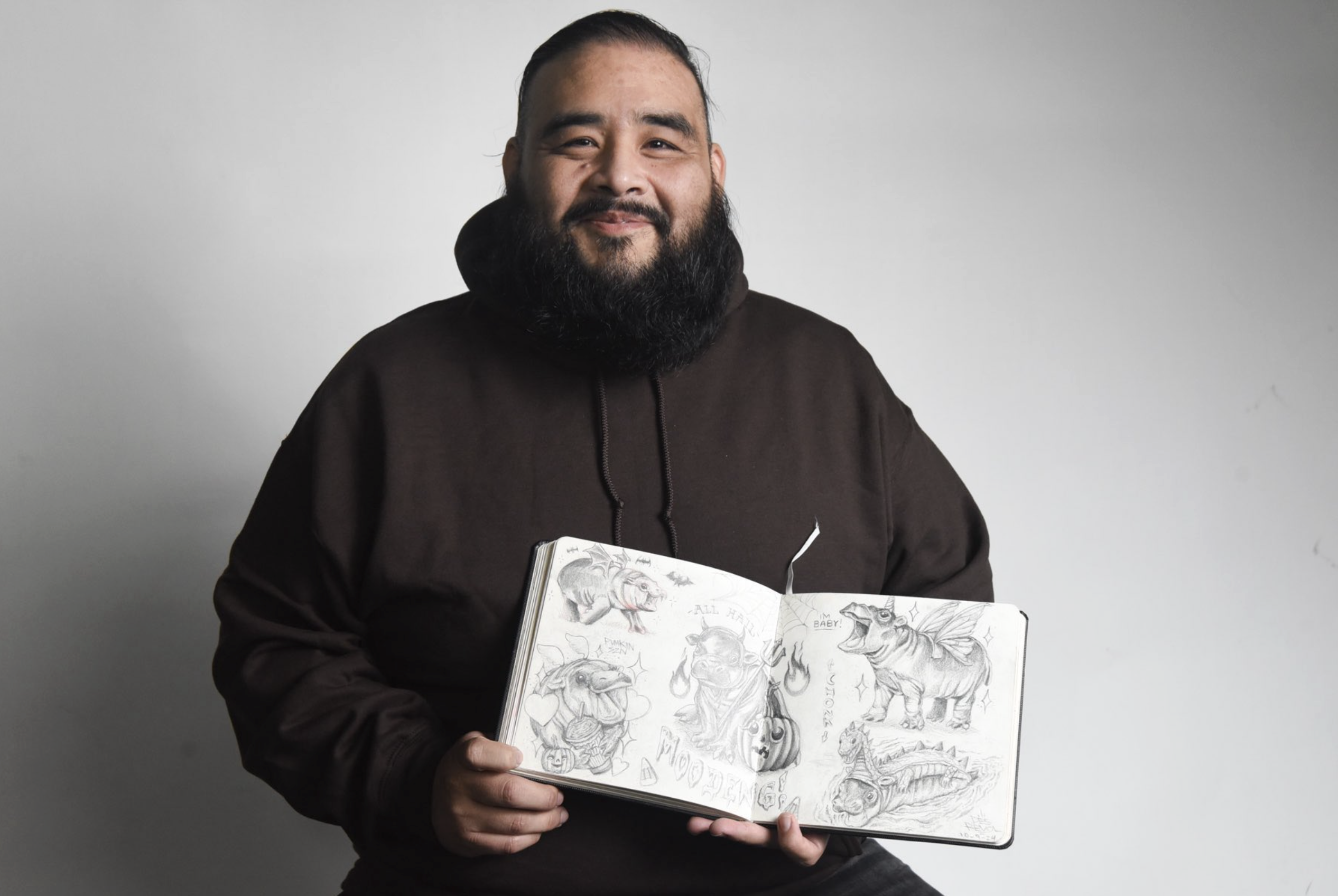
The jovial cartoonist Daniel “Des” Rolando Sanchez Estrada didn’t attend the protest. He moved their collection of anarchist zines from his home upon learning that the FBI might be coming to arrest his wife, Maricela Rueda.
Even though he did not attend the July 4th noise protest, he was sentenced to 30 years in prison. The U.S. Justice Department charged him with “concealing a document or record (18 U.S.C. § 1512(c)(1))” — by moving a box of Antifa zines/pamphlets to hide them from investigators. His wife was sentenced to 70 years in federal prison.
“They’re persecuting people for beliefs that they don’t like,” Sanchez Estrada emphasized. “I didn’t do anything. I don’t want to hurt anybody.”
Benjamin “Champagne” Song, who was sentenced to 100 years in prison, said, “I don’t hate. I don’t hate anyone. I don’t hate cops. I don’t hate Trump. I don’t hate Nazis. My beliefs are composed thus: First, that we should help each other. And second, that we should protect one another.”
The eight Prairieland defendants were sentenced to consecutive prison terms as follows:
- Savanna Batten: 50 years
- Zachary Evetts: 50 years
- Autumn Hill: 50 years
- Meagan Morris: 50 years
- Maricela Rueda: 70 years
- Daniel Rolando Sanchez Estrada: 30 years
- Benjamin Hanil Song: 100 years
- Elizabeth Soto: 50 years
The matrix of crises, from genocide, war, and poverty to censorship, mass surveillance, and police repression, is causing many Americans, from former Trump supporters to liberals to people who have no political identification, to believe that something must be done to stop the madness.
As the number of Food Not Bombs groups increases, there is also increased debate in our community about what actions, along with our mutual aid work, we can take to build a world where soup lines are not a necessity and wars are no more.
So far, the Democratic Party’s ‘Indivisible’ has succeeded in killing any attempt at building a mass movement against the political and economic system. Their ‘ActBlue’ and ‘Our Revolution’ email lists have been able to fill the protest space with unthreatening, demand-free parades.But at the same time it seems that the ‘No Kings’ people are starting to lose control of their Vote Blue No Matter Who message. Their events are being diluted with signs by people desperate to end policies of war and genocide that Indivisible supports.
We have to build another strategy that is more effective at forming an alternative to the current cruel system. Take actions that disrupt the ability of the corporate state to crush us. We can’t hope for reform from people willing to deploy weapons that melt the skulls of Palestinian children and rejoice in killing 118 men seeking food aid with machine-gun mounted drones during the February 29, 2024 north Gaza “Flour Massacre”. Their genocide is a message to all of us. They will stop at nothing to defend their power.
The first step might be realizing that we all have more in common than the billionaires manipulating us with their media. Most Americans are much more compassionate than is portrayed on our screens or in election campaigns designed to divide and control us.
Second, we could organize around demands Americans share that could challenge power, and figure out what actions would be threatening enough to collapse the Epstein class, making room for a healthy, caring society. Consider general strikes, blockades, boycotts, sabotage, hacking, and occupations. The more difficult task is agreeing on what type of system to replace the current one with.
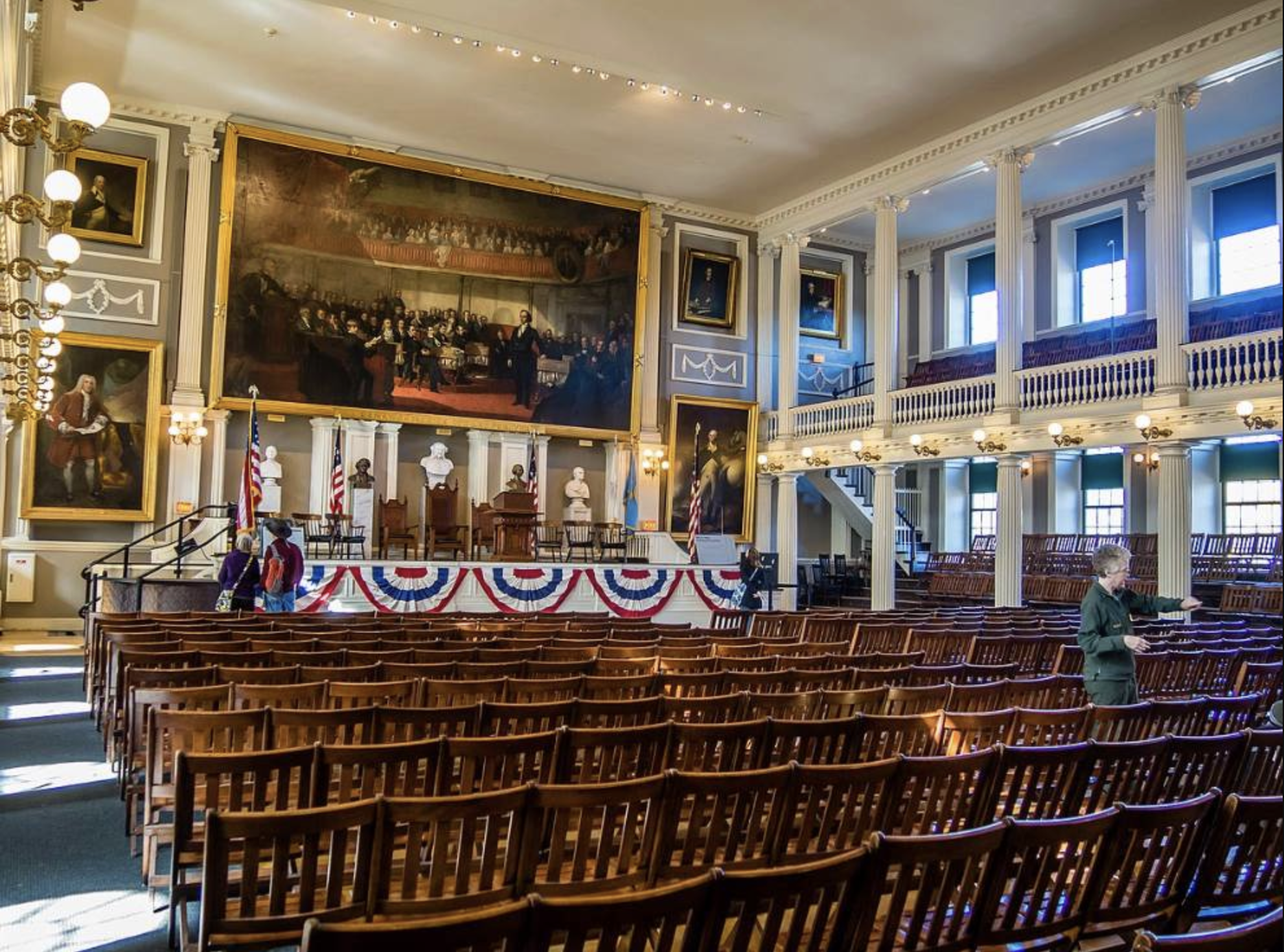
When I was a National Park Ranger at Boston Historic Park, I was stationed at historic Faneuil Hall. The colonial market, nicknamed the “Cradle of Liberty,” was topped with a huge golden grasshopper weather vane, with rows of shops on the first floor and the giant hall ringed with a balcony on the second floor. Five days a week, I would stand at the head of the lecture hall dressed in my gray and green uniform with the brown National Park Service arrowhead logo stitched to each shoulder with the intention of exciting tourists with the history of the famous orators who had graced the colonial building.
Since the United States was celebrating its 200th anniversary, I started out my speech about speeches with great orators of the American Revolution, patriots James Otis, Samuel Adams, and others who spoke in protest against the British.
I continued with stories about the abolitionists and suffragists like Lucy Stone, who spoke before a crowd of 3,000 at Faneuil Hall in 1873. Her words would energize the women’s rights movement not only in Boston, but throughout the United States.
I spoke of John F. Kennedy who stood before his supporters on July 4, 1946, to announce in his Independence Day speech, “Some Elements of the American Character,” that he would be running for Congress in the 11th Congressional District.
My co-worker and I took turns sharing the history of these famous speeches seven times a day. We competed to see who could inspire the largest and loudest standing ovation. A sure way to get our audience of tourists to jump to their feet was to end with the words, “And the conditions are such today that we need a Second American Revolution!”
Fifty years later, we still need a second American Revolution. The draconian sentences of the Prairieland protesters were meant to silence us with fear, but the human spirit won’t let them succeed. We won’t be intimidated.
We need a revolution of compassion, because that is really who we are.
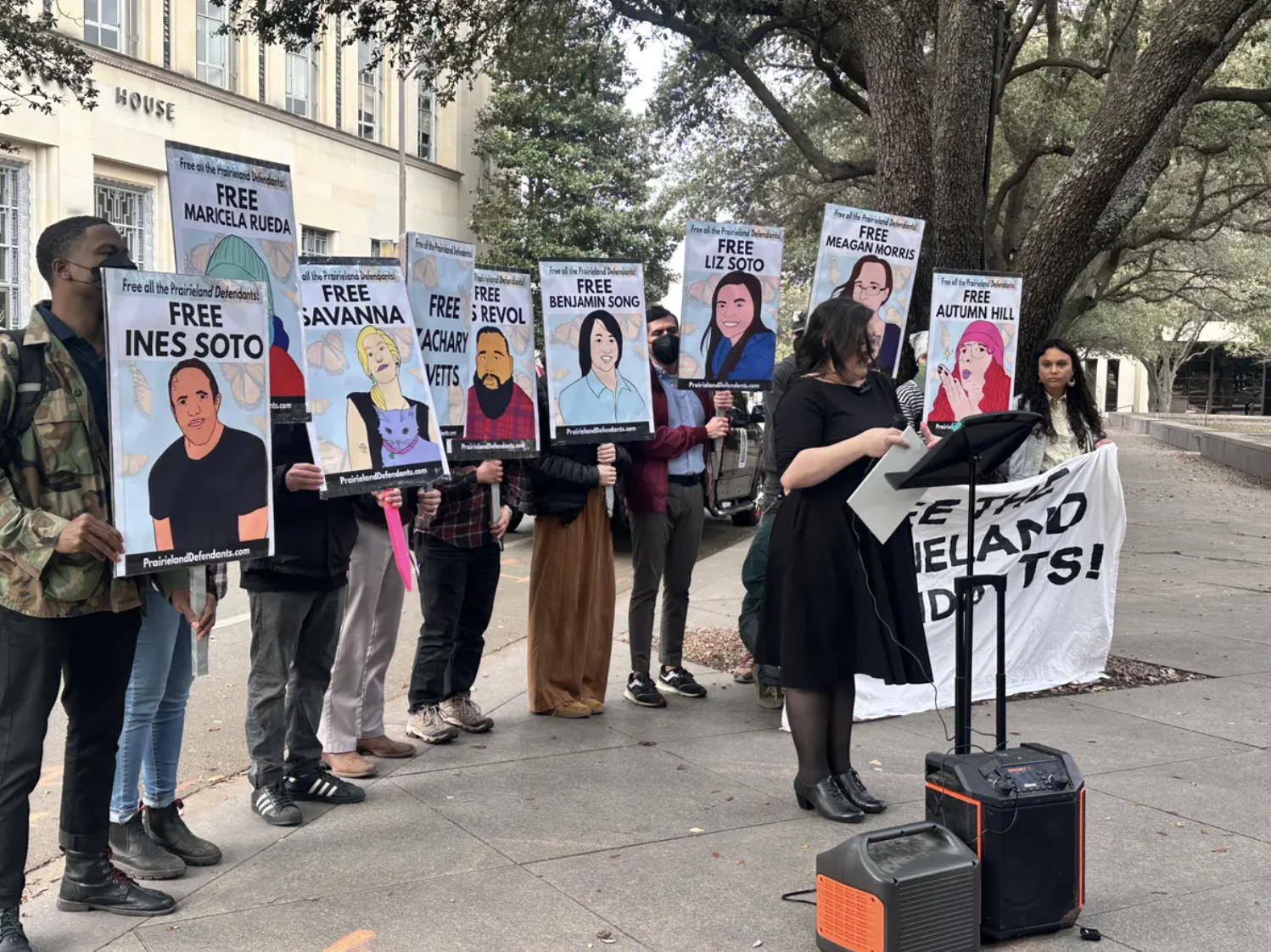
FREE THE PRAIRIELAND DEFENDANTS

